
Product Description of Benzene CAS#71-43-2
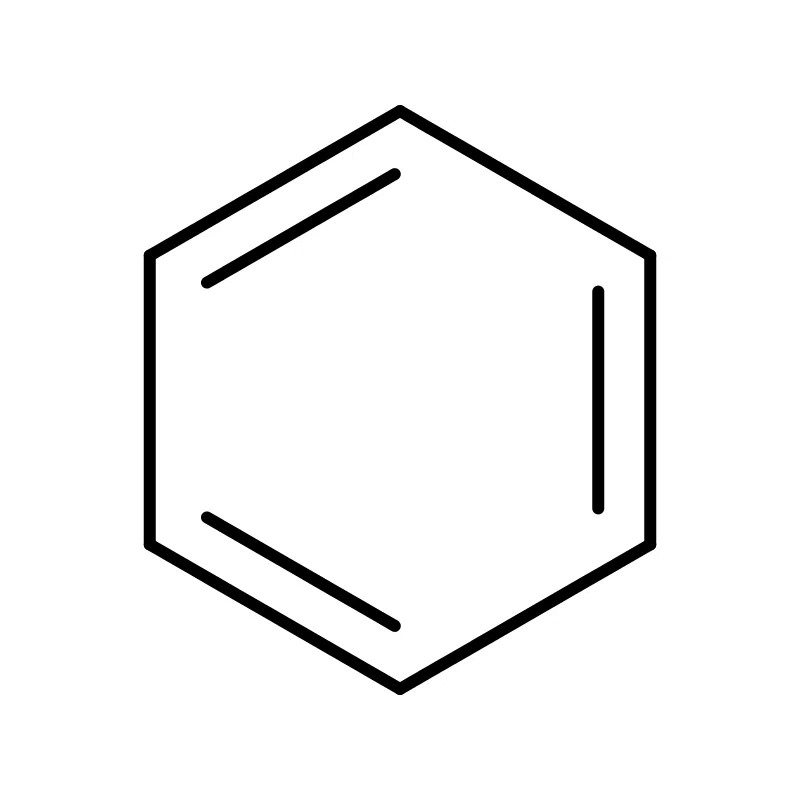
Benzene (C₆H₆) is a widely utilized aromatic hydrocarbon that appears as a colorless, highly flammable liquid with a characteristic sweet odor. It is an important basic raw material in the chemical industry, extensively applied in the manufacture of polymers, synthetic fibers, rubber, and various other chemical products. Benzene serves as a key building block for producing a wide range of derivatives, including styrene, phenol, cyclohexane, and other industrial chemicals.
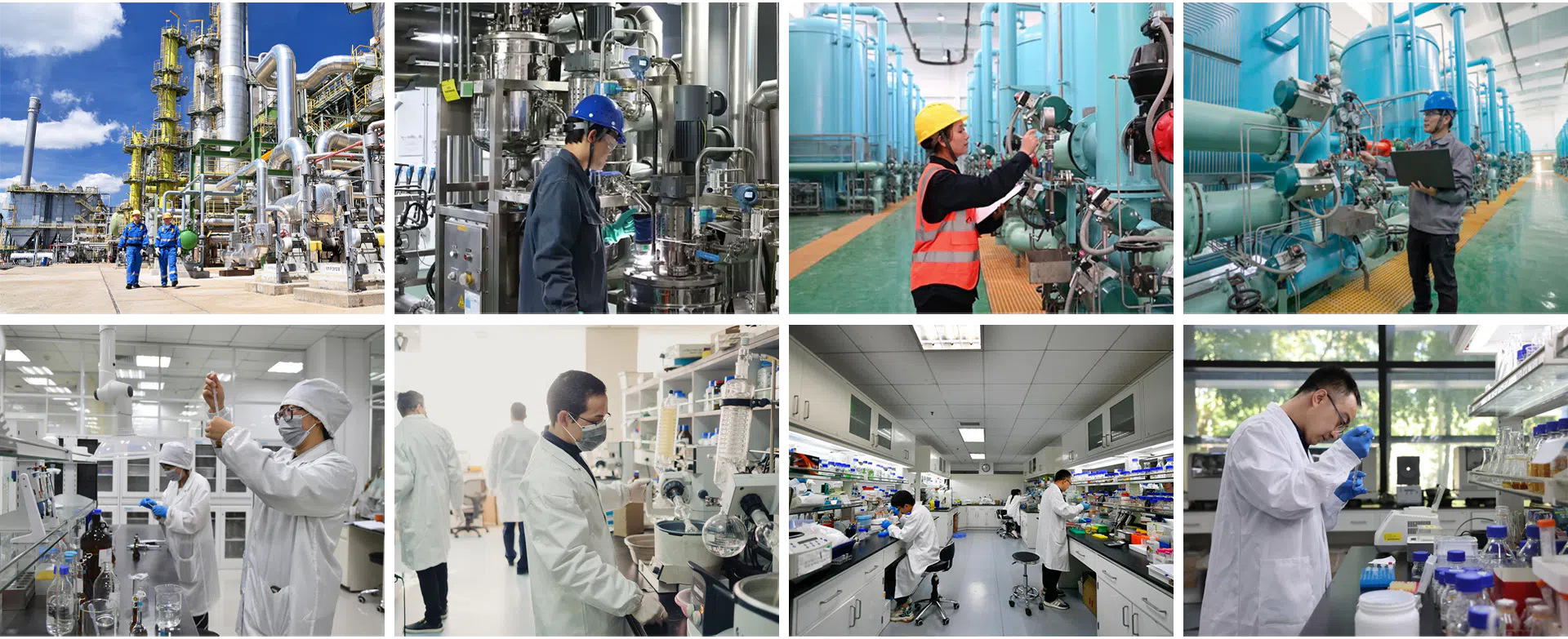
Factory Showcase
Chemical Properties of Benzene CAS#71-43-2
| Melting point | 5.5 °C (lit.) |
| Boiling point | 80 °C (lit.) |
| density | 0.874 g/mL at 25 °C (lit.) |
| vapor density | 2.77 (vs air) |
| vapor pressure | 166 mm Hg ( 37.7 °C) |
| refractive index | n20/D 1.501(lit.) |
| Fp | 12 °F |
| storage temp. | room temp |
| solubility | Miscible with alcohol, chloroform, dichloromethane, diethyl ether, acetone and acetic acid. |
| pka | 43(at 25℃) |
| form | Liquid |
| color | APHA: ≤10 |
| Relative polarity | 0.111 |
| Odor | Paint-thinner-like odor detectable at 12 ppm |
| Odor Threshold | 2.7ppm |
| explosive limit | 1.4-8.0%(V) |
| Water Solubility | 0.18 g/100 mL |
| Thermal Conductivity | 0.1412 W/(m·K) at 25 ℃ |
| Specific Heat Capacity | Cp(liquid): 1.74 J/(g·K); Cp(gas): 1.05 J/(g·K), at 25℃ |
| λmax | λ: 280 nm Amax: 1.0 λ: 290 nm Amax: 0.15 λ: 300 nm Amax: 0.06 λ: 330 nm Amax: 0.02 λ: 350-400 nm Amax: 0.01 |
| Merck | 14,1066 |
| BRN | 969212 |
| Henry's Law Constant | 10.4 at 45.00 °C, 11.4 at 50.00 °C, 13.3 at 55.00 °C, 14.5 at 60.00 °C, 16.8 at 65.00 °C, 19.2 at 70.00 °C (static headspace-GC, Park et al., 2004) |
| Dielectric constant | 2.3(20℃) |
| Exposure limits | ACGIH TLV-TWA:0.02 ppm OSHA PEL-TWA:10 ppm (~32 mg/m3);PEL-Ceiling:25 ppm (~80 mg/m3);PEL-peak:50 ppm (~160 mg/m3)/10 min/8 h NIOSH REL-TWA:0.1 ppm;REL-STEL:1 ppm |
| Stability: | Stable. Substances to be avoided include strong oxidizing agents, sulfuric acid, nitric acid, halogens. Highly flammable. |
| InChI | 1S/C6H6/c1-2-4-6-5-3-1/h1-6H |
| InChIKey | UHOVQNZJYSORNB-UHFFFAOYSA-N |
| SMILES | c1ccccc1 |
| LogP | 2.130 |
| Surface tension | 28.891mN/m at 293.15K |
| CAS DataBase Reference | 71-43-2(CAS DataBase Reference) |
| NIST Chemistry Reference | Benzene(71-43-2) |
| IARC | 1 (Vol. 29, Sup 7. 100F, 120) 2018 |
| EPA Substance Registry System | Benzene (71-43-2) |
Safety Information
| Hazard Codes | F,T |
| Risk Statements | 45-46-11-36/38-48/23/24/25-65-39/23/24/25-23/24/25 |
| Safety Statements | 53-45-36/37-16-7 |
| OEB | E |
| OEL | TWA: 0.1 ppm, STEL: 1 ppm |
| RIDADR | UN 1114 |
| WGK Germany | 3 |
| RTECS | CY1400000 |
| F | 3-10 |
| Autoignition Temperature | 560 °C |
| TSCA | TSCA listed |
| HS Code | 2902 20 00 |
| HazardClass | 3 |
| PackingGroup | II |
| Storage Class | 3 - Flammable liquids |
| Hazard Classifications | Aquatic Chronic 3 Asp. Tox. 1 Carc. 1A Eye Irrit. 2 Flam. Liq. 2 Muta. 1B Skin Irrit. 2 STOT RE 1 |
| Hazardous Substances Data | 71-43-2(Hazardous Substances Data) |
| Toxicity | LD50 orally in young adult rats: 3.8 ml/kg (Kimura) |
| IDLH | 500 ppm |
Inventory Display
Product Application of Benzene CAS#71-43-2
Styrene Production: Benzene serves as a precursor for styrene, which is widely used in the production of polystyrene, ABS plastics, and synthetic rubber.
Phenol Production: Benzene is utilized in the manufacture of phenol, an essential raw material for producing plastics, resins, and adhesives.
Cyclohexane Production: Benzene is used to produce cyclohexane, which is an important intermediate for the manufacture of nylon and other synthetic fibers.
Caprolactam Production: Benzene acts as a raw material in the production of caprolactam, a key component used in nylon-6 manufacturing.
Solvent Applications:
Due to its excellent solvent properties, benzene has been widely used in laboratories and industrial processes for dissolving oils, resins, and other organic substances. However, its application as a solvent has gradually decreased as industries shift toward safer alternatives due to its carcinogenic properties.
Pharmaceutical Applications:
Benzene is utilized as an important starting material in the synthesis of various pharmaceutical products and intermediates.
Rubber Manufacturing:
Benzene is involved in the production of synthetic rubber materials, including butadiene-based rubber, which is widely used in tires and other rubber products.
Paints and Coatings:
Benzene can be used as a solvent in the formulation of paints, coatings, varnishes, and lacquers, contributing to improved processing performance.
Transportation and Delivery