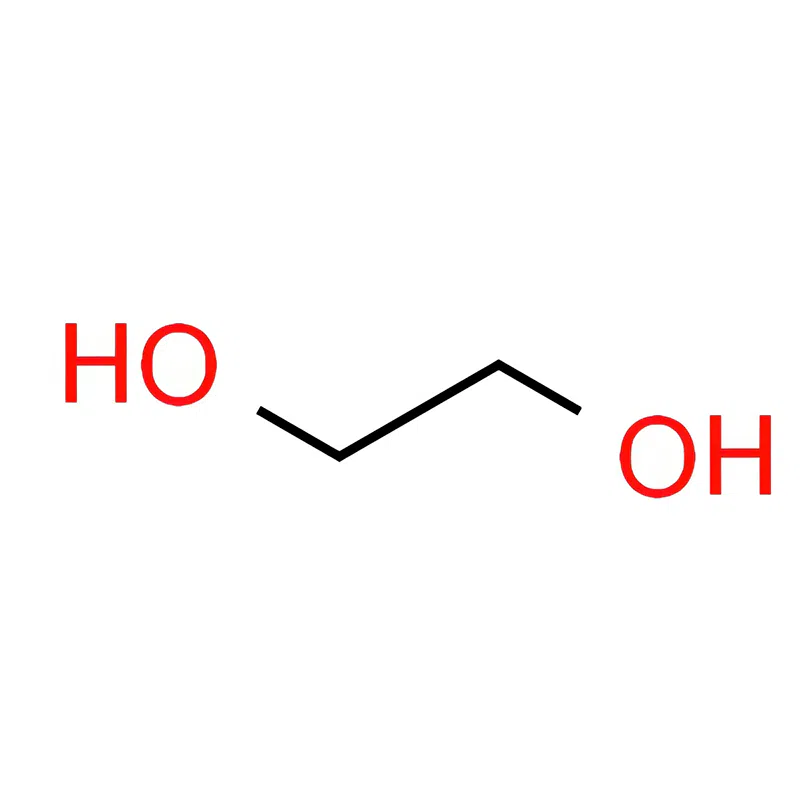
Product Description of Ethylene Glycol CAS#107-21-1
Ethylene glycol primarily serves as an antifreeze agent in automobile cooling systems and as a key raw material for producing polyethylene terephthalate (PET), which is used in manufacturing polyester fibers and plastics. Additionally, it finds application in the production of synthetic resins, solvents, lubricants, surfactants, softeners, wetting agents, and explosives. In industrial applications, ethylene glycol frequently substitutes for glycerol, functioning as a humectant in the leather industry and as a solvent in pharmaceutical manufacturing.
Despite its strong solvent properties, ethylene glycol has limited use as a general-purpose solvent due to its metabolic conversion to toxic oxalic acid through oxidation in biological systems.
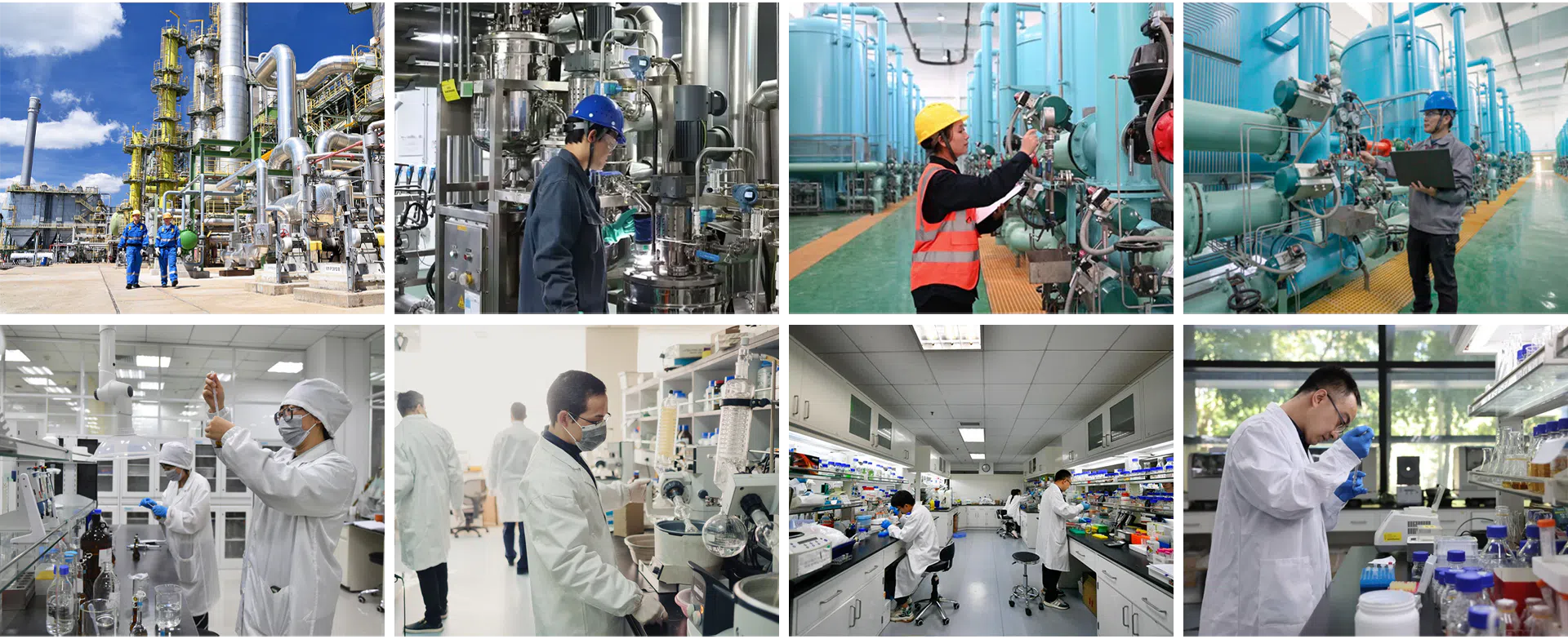
Factory Showcase
Chemical Properties of Ethylene Glycol CAS#107-21-1
| Melting point | -13 °C (lit.) |
| Boiling point | 195-198 °C |
| density | 1.113 g/mL at 25 °C (lit.) |
| vapor density | 2.1 (vs air) |
| vapor pressure | 0.08 mm Hg ( 20 °C) |
| refractive index | n20/D 1.431(lit.) |
| Fp | 230 °F |
| storage temp. | 2-8°C |
| solubility | water: miscible |
| form | Viscous Liquid |
| pka | 14.22(at 25℃) |
| color | blue |
| Relative polarity | 0.79 |
| PH | 6-7.5 (100g/l, H2O, 20℃) |
| Odor | Odorless |
| explosive limit | 3.2%(V) |
| Water Solubility | miscible |
| FreezingPoint | -11.5℃ |
| Sensitive | Hygroscopic |
| λmax | λ: 260 nm Amax: ≤0.03 λ: 280 nm Amax: ≤0.01 |
| Merck | 14,3798 |
| BRN | 505945 |
| Exposure limits | Ceiling limit in air for vapor and mist 50 ppm (~125 mg/m3) (ACGIH); TWA 10 mg/m3 (particulates) (MSHA). |
| Dielectric constant | 37.0(20℃) |
| LogP | -1.36 at 25℃ |
| Surface tension | 47.7mN/m at 20°C |
| CAS DataBase Reference | 107-21-1(CAS DataBase Reference) |
| NIST Chemistry Reference | 1,2-Ethanediol(107-21-1) |
| EPA Substance Registry System | Ethylene glycol (107-21-1) |
Safety Information
| Hazard Codes | Xn |
| Risk Statements | 22-36-41 |
| Safety Statements | 26-39-36/37/39 |
| WGK Germany | 3 |
| RTECS | KW2975000 |
| Autoignition Temperature | 752 °F |
| TSCA | Yes |
| HS Code | 29053100 |
| Hazardous Substances Data | 107-21-1(Hazardous Substances Data) |
| Toxicity | LD50 in rats, guinea pigs (g/kg): 8.54, 6.61 orally (Smyth); in mice (ml/kg): 13.79 orally (Bornmann) |
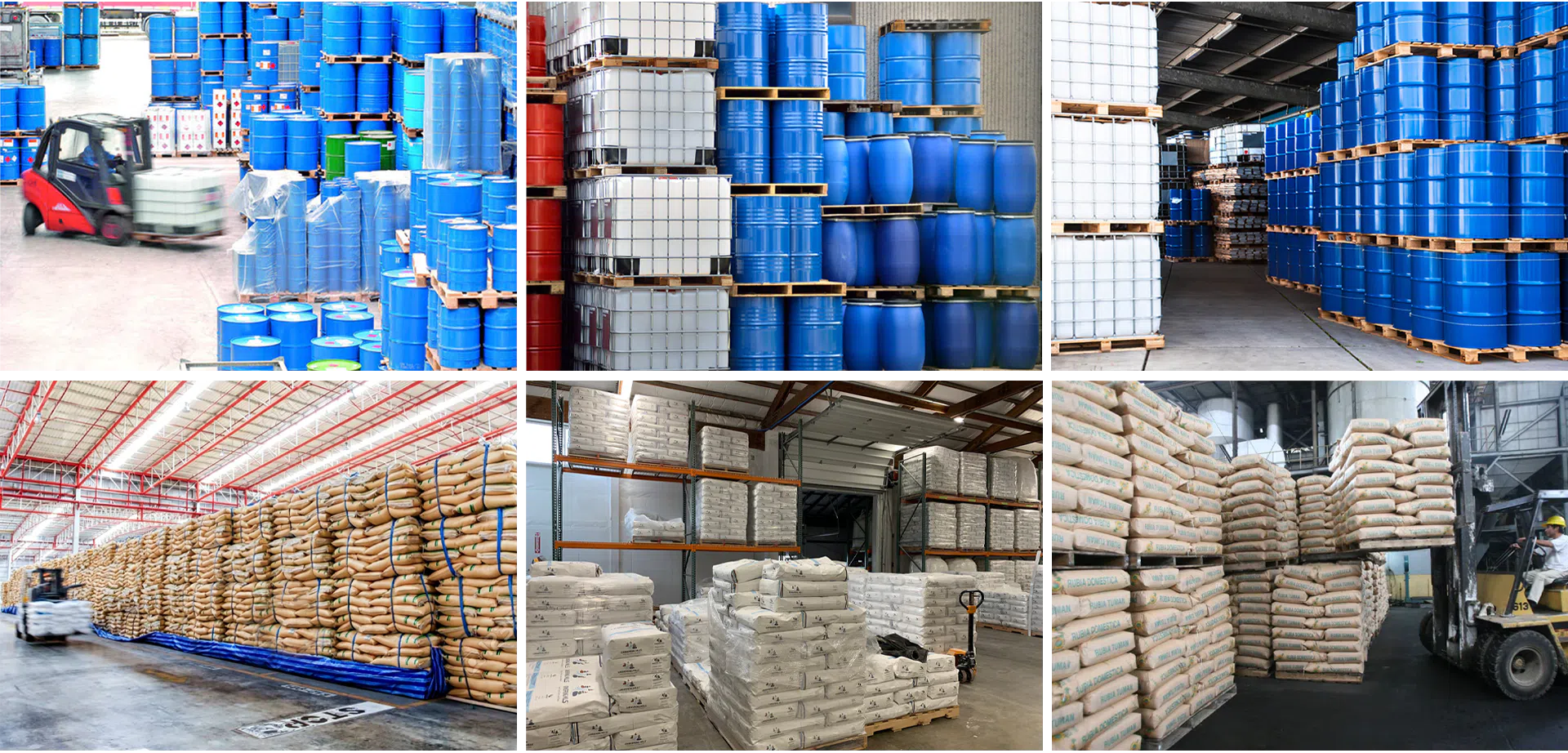
Inventory Display
Product Application of Ethylene Glycol CAS#107-21-1
Ethylene Glycol (CAS# 107-21-1) is a colorless, odorless, hygroscopic dihydric alcohol widely used as an antifreeze agent, coolant, and chemical intermediate. In the automotive industry, it serves as the primary component in engine coolants and heat-transfer fluids due to its low freezing point and high boiling point. It is also essential in the production of polyethylene terephthalate (PET) resins, polyester fibers, and films. Industrial applications include use as a solvent, deicing agent for aircraft runways, and hydrate inhibition in natural gas pipelines. Additionally, it functions as a humectant in certain adhesives, inks, and textile treatments. Its excellent solvency and chemical stability make it a critical raw material in numerous manufacturing processes. Proper handling and safety measures are required due to its toxicity.
Transportation and Delivery