
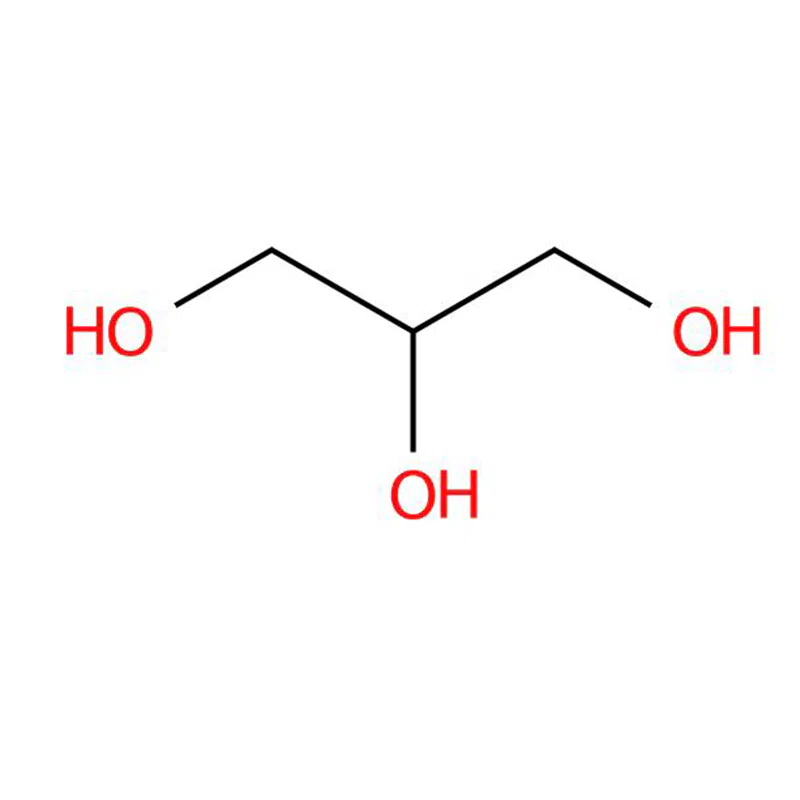
Product Description of Glycerol CAS#56-81-5
Glycerol (CAS#56-81-5) is a simple polyol compound that is colorless, odorless, viscous, and sweet-tasting. It is highly soluble in water and hygroscopic in nature.
In personal care, glycerol is widely used as a humectant and emollient in creams, lotions, and soaps. In pharmaceuticals, it appears in cough syrups, suppositories, and topical formulations as a lubricant and solvent. The food industry employs it as a sweetener, preservative, and thickening agent.
Industrial applications include use as a plasticizer and as a raw material for producing epichlorohydrin and propylene glycol. In biotechnology, glycerol serves as a cryoprotectant and protein stabilizer. Moreover, as a biodiesel byproduct, it is increasingly utilized to produce value-added chemicals, supporting sustainable development.
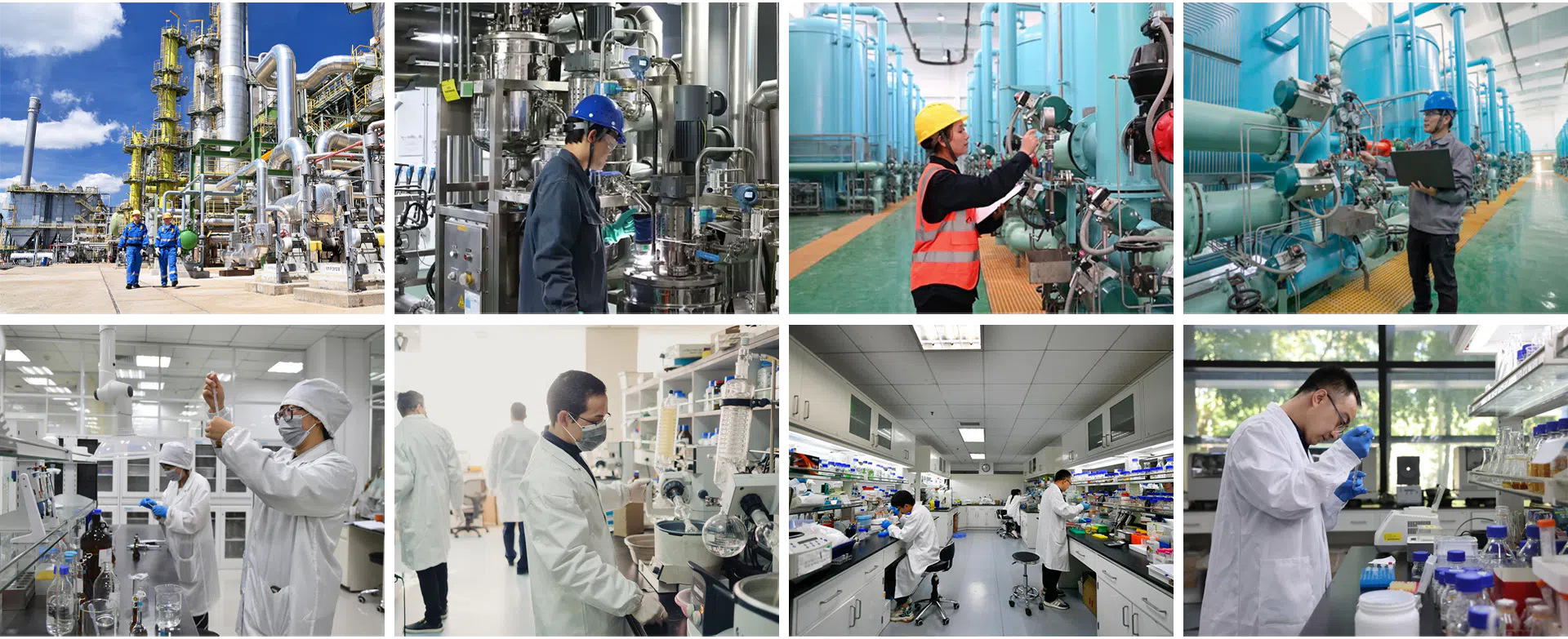
Factory Showcase
Chemical Properties of Glycerol CAS#56-81-5
| Melting point | 20 °C(lit.) |
| Boiling point | 290 °C |
| density | 1.25 g/mL(lit.) |
| vapor density | 3.1 (vs air) |
| vapor pressure | <1 mm Hg ( 20 °C) |
| refractive index | n20/D 1.474(lit.) |
| FEMA | 2525 | GLYCEROL |
| Fp | 320 °F |
| storage temp. | Store at +5°C to +30°C. |
| solubility | H2O: 5 M at 20 °C, clear, colorless |
| pka | 14.15(at 25℃) |
| form | Viscous Liquid |
| color | APHA: ≤10 |
| Specific Gravity | 1.265 (15/15℃)1.262 |
| Odor | Odorless. |
| PH Range | 5.5 - 8 |
| PH | 5.5-8 (25℃, 5M in H2O) |
| explosive limit | 2.6-11.3%(V) |
| Odor Type | odorless |
| biological source | synthetic (organic) |
| Water Solubility | >500 g/L (20 ºC) |
| Sensitive | Hygroscopic |
| λmax | λ: 260 nm Amax: 0.05 λ: 280 nm Amax: 0.04 |
| Merck | 14,4484 |
| JECFA Number | 909 |
| BRN | 635685 |
| Dielectric constant | 47.0(Ambient) |
| Exposure limits | OSHA: TWA 15 mg/m3; TWA 5 mg/m3 |
| Stability: | Stable. Incompatible with perchloric acid, lead oxide, acetic anhydride, nitrobenzene, chlorine, peroxides, strong acids, strong bases. Combustible. |
| InChIKey | PEDCQBHIVMGVHV-UHFFFAOYSA-N |
| LogP | -2.32 |
| Surface tension | 64mN/m at 20°C |
| CAS DataBase Reference | 56-81-5(CAS DataBase Reference) |
| NIST Chemistry Reference | 1,2,3-Propanetriol(56-81-5) |
| EPA Substance Registry System | Glycerine (56-81-5) |
| Absorption | ≤0.02 at 280nm in H2O at 0.5M ≤0.07 at 260nm in H2O at 0.5M |
Safety Information
| Hazard Codes | F,Xn |
| Risk Statements | 36-20/21/22-11 |
| Safety Statements | 24/25-39-26 |
| RIDADR | UN 1282 3/PG 2 |
| WGK Germany | 1 |
| RTECS | MA8050000 |
| F | 3 |
| Autoignition Temperature | 698 °F |
| TSCA | Yes |
| HS Code | 29054500 |
| Hazardous Substances Data | 56-81-5(Hazardous Substances Data) |
| Toxicity | LD50 in rats (ml/kg): >20 orally; 4.4 i.v. (Bartsch) |
Inventory Display
Product Application of Glycerol CAS#56-81-5
Glycerol (CAS#56-81-5) is a versatile polyol with broad applications. In personal care and pharmaceuticals, it acts as a humectant, emollient, and lubricant in cosmetics, lotions, cough syrups, and suppositories. In food, it serves as a sweetener, preservative, and thickening agent. Industrially, glycerol is used as a plasticizer and as a feedstock for epichlorohydrin and propylene glycol production. In biotechnology, it functions as a cryoprotectant and protein stabilizer. Additionally, as a biodiesel byproduct, glycerol is increasingly converted into value-added chemicals like hydrogen and citric acid, supporting green chemistry and sustainable manufacturing processes.
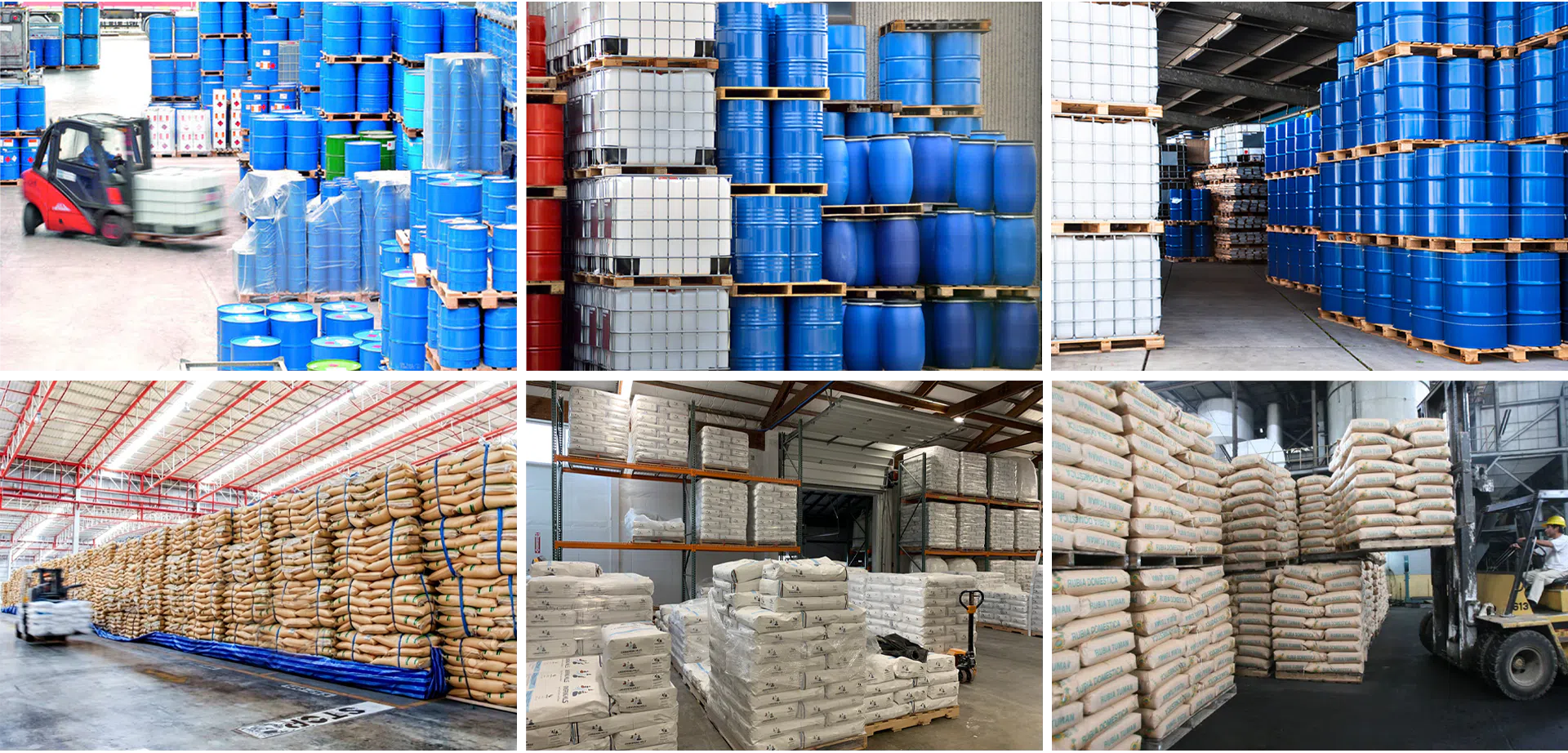
Transportation and Delivery