
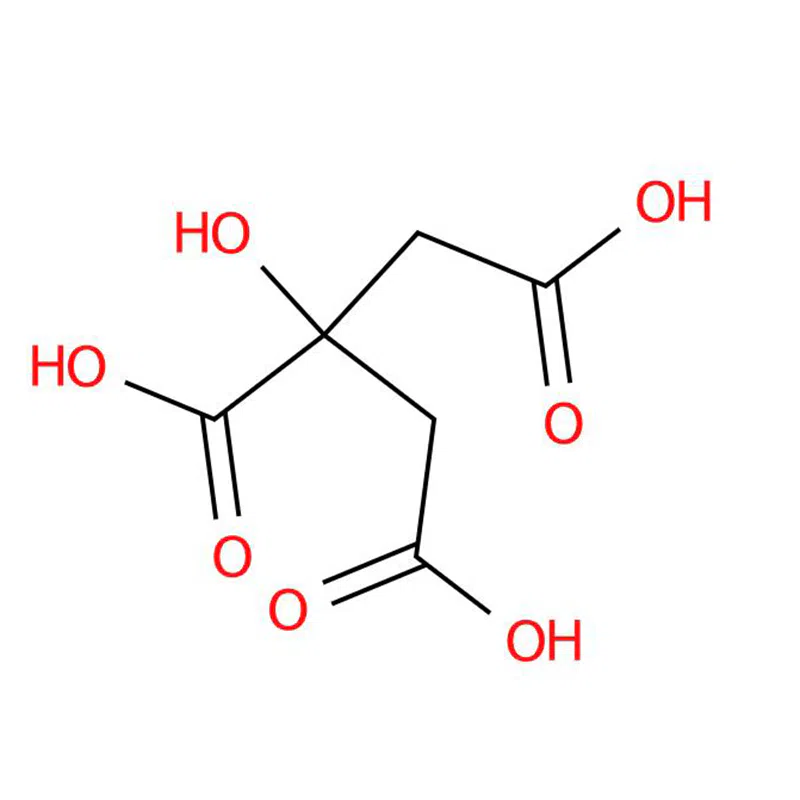
Product Description of Citric Acid CAS#77-92-9
Anhydrous citric acid is a naturally occurring substance and an intermediate metabolite in the physiological processes of both plants and animals. It is also one of the most extensively utilized organic acids in the food, pharmaceutical, and chemical industries. This compound appears as colorless, transparent, or semi-transparent crystals, as well as granular or fine powder.
It is odorless, with a pronounced sour taste that is pleasantly tart yet slightly astringent afterward. When exposed to warm air, it gradually loses moisture (weathers), and in humid conditions, it shows slight deliquescence.
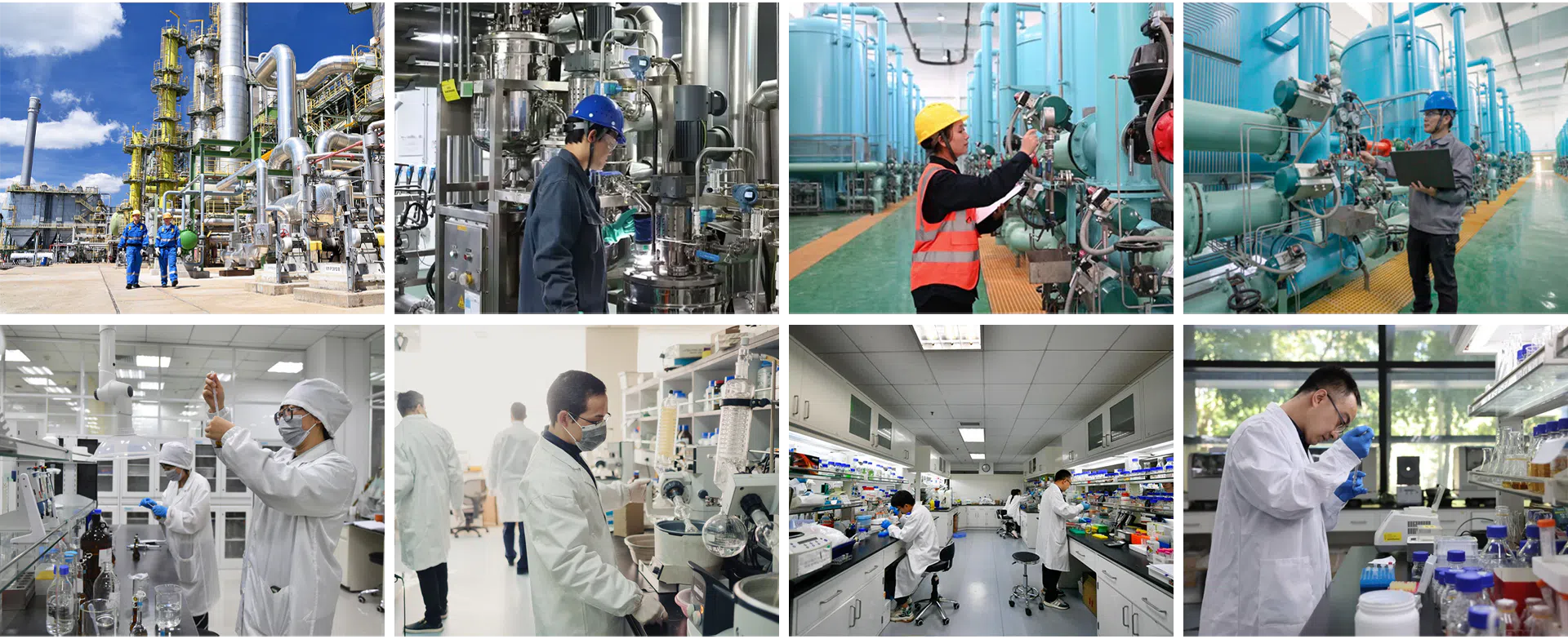
Factory Showcase
Chemical Properties of Citric Acid CAS#77-92-9
| Melting point | 153-159 °C (lit.) |
| Boiling point | 248.08°C (rough estimate) |
| density | 1.67 g/cm3 at 20 °C |
| bulk density | 560kg/m3 |
| vapor density | 7.26 (vs air) |
| vapor pressure | <0.1 hPa (20 °C) |
| refractive index | 1.493~1.509 |
| FEMA | 2306 | CITRIC ACID |
| Fp | 100 °C |
| storage temp. | 2-8°C |
| solubility | Citric acid also dissolves in absolute (anhydrous) ethanol (76 parts of citric acid per 100 parts of ethanol) at 15 °C. |
| form | grit |
| pka | 3.14(at 20℃) |
| color | White |
| PH | 3.24(1 mM solution);2.62(10 mM solution);2.08(100 mM solution); |
| Odor | Odorless |
| biological source | synthetic |
| Odor Type | odorless |
| explosive limit | 8%, 65°F |
| soluble in Water (1174g/L at 10°C, 1809g/L at 30°C, 3825g/L at 80°C). | |
| Sensitive | Hygroscopic |
| λmax | λ: 260 nm Amax: 0.20 λ: 280 nm Amax: 0.10 |
| Merck | 14,2326 |
| JECFA Numbr | 218 |
| BRN | 782061 |
| Stability: | Stable. Incompatible with bases, strong oxidizing agents, reducing agents, metal nitrates. |
| InChIKey | KRKNYBCHXYNGOX-UHFFFAOYSA-N |
| LogP | -1.64 |
| CAS DataBase Reference | 77-92-9(CAS DataBase Reference) |
| NIST Chemisty Reference | 1,2,3-Propanetricarboxylic acid, 2-hydroxy-(77-92-9) |
| EPA Substance Registry System | Citric acid (77-92-9) |
Safety Information
| Hazard Codes | Xi,C,T |
| Risk Statements | 41-36/37/38-36/38-37/38-34-36-35-61-60 |
| Safety Statements | 26-39-37/39-24/25-36/37/39-45-36-53 |
| RIDADR | UN 1789 8/PG 3 |
| WGK Germany | 1 |
| RTECS | GE7350000 |
| F | 9 |
| TSCA | Yes |
| HS Code | 2918 14 00 |
| Hazardous Substances Data | 77-92-9(Hazardous Substances Data) |
| Toxicity | LD50 in mice, rats (mmol/kg): 5.0, 4.6 i.p. (Gruber, Halbeisen) |
Inventory Display
Product Application of Citric Acid CAS#77-92-9
Citric acid (CAS# 77-92-9) is a naturally occurring organic acid widely used as an acidulant, preservative, and chelating agent. In the food and beverage industry, it enhances flavor, adjusts pH, and acts as a natural antioxidant synergist. It is also essential in pharmaceutical formulations for effervescent tablets and as a buffer. Industrial applications include water softening, descaling, and metal cleaning due to its excellent chelation properties. Additionally, it serves as a key ingredient in cosmetics, personal care products, and biodegradable detergents. Safe, environmentally friendly, and versatile, citric acid is one of the most widely produced organic acids globally.
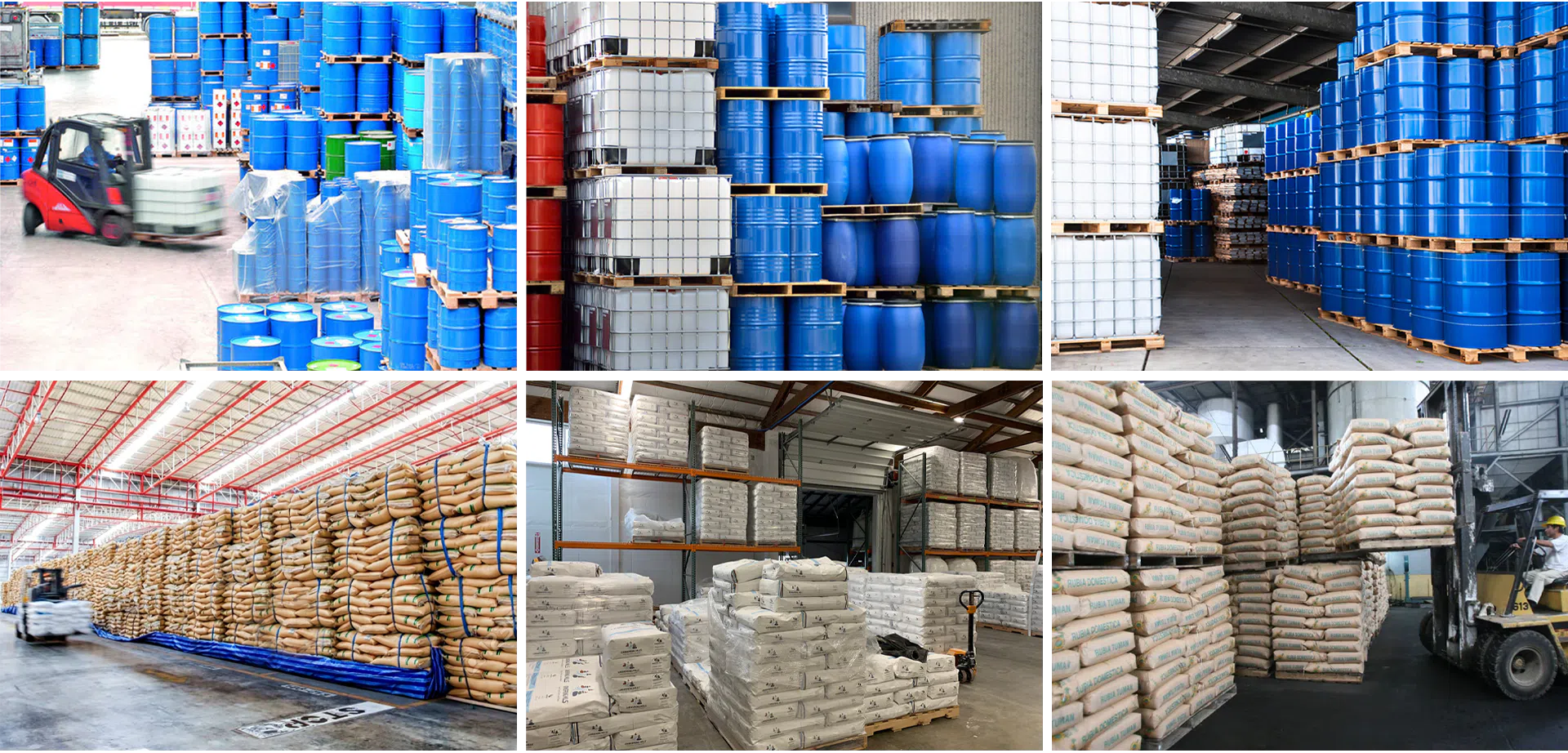
Transportation and Delivery