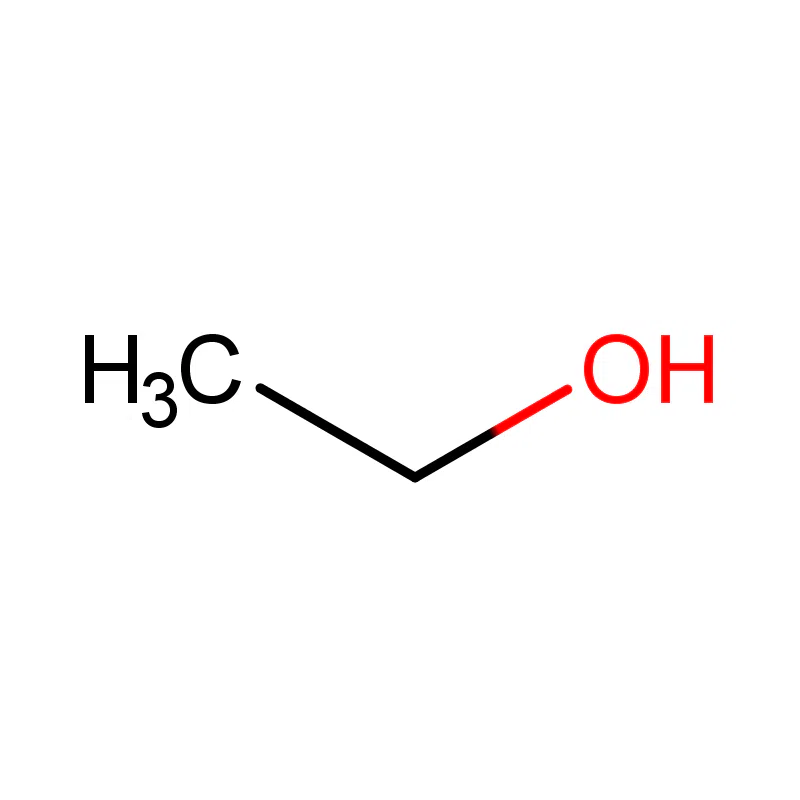
Product Description of Ethanol CAS#64-17-5
Ethanol is a common low-grade monohydric alcohol organic solvent. It is a colorless and transparent flowing liquid with pure alcohol aroma at room temperature, featuring good volatility and unlimited miscibility with water, ether, acetone and various organic solvents. With stable physicochemical properties, wide solubility, mild characteristics and moderate reactivity, it is a highly versatile basic raw material for daily chemical, food, pharmaceutical and chemical industries.
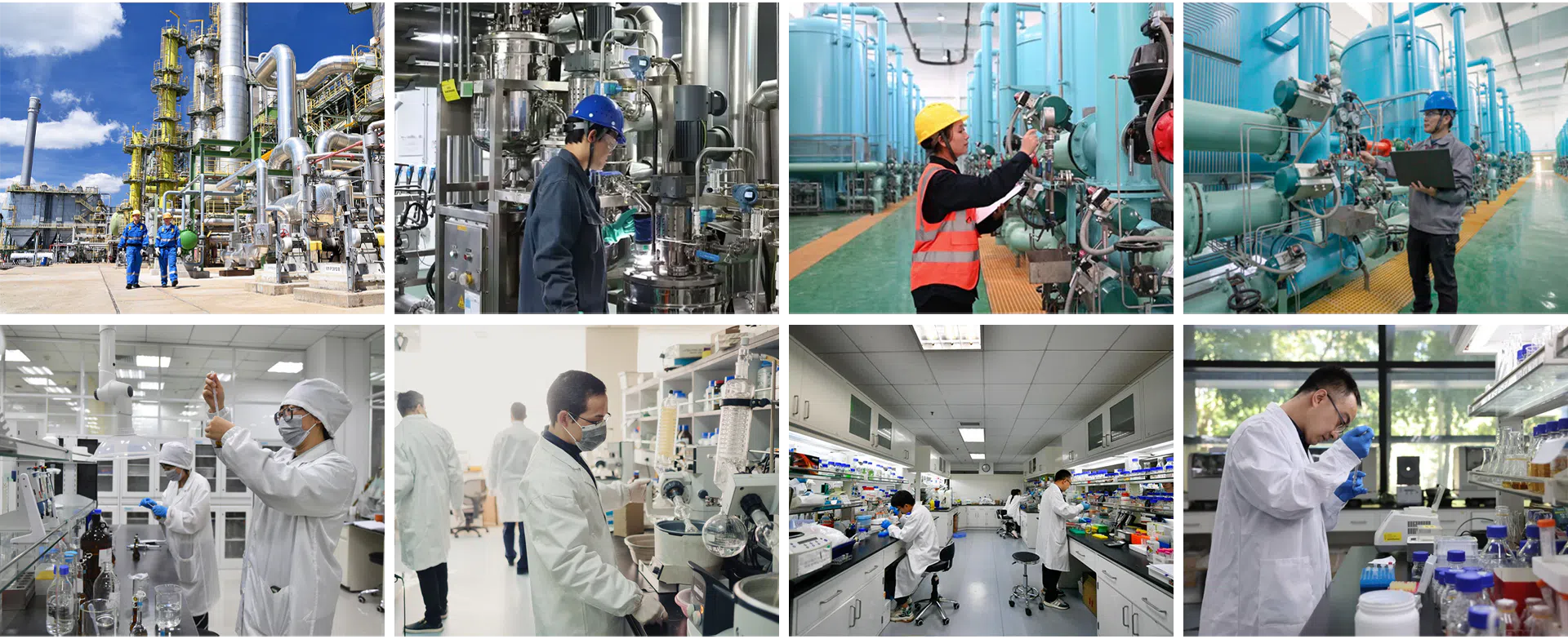
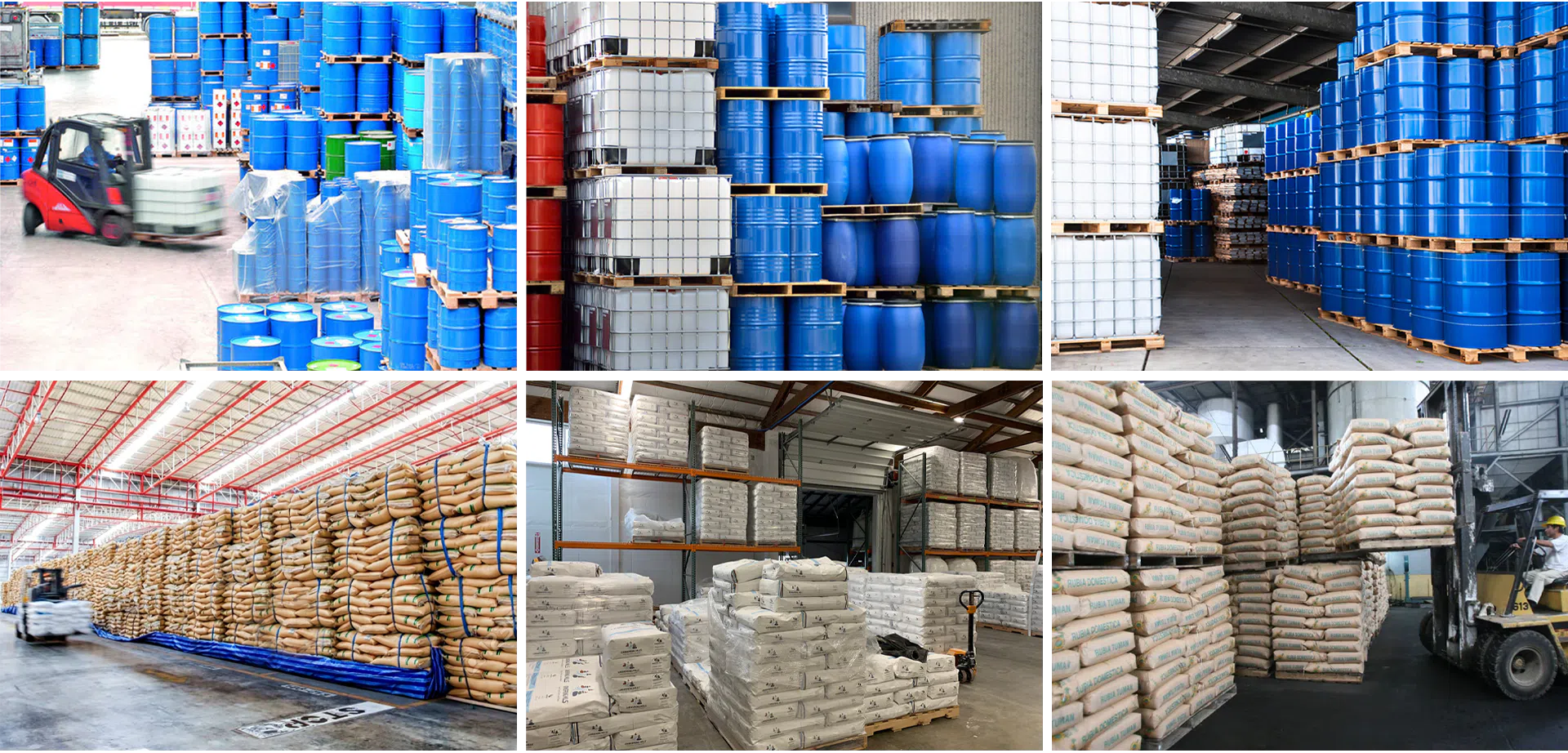
Factory Showcase
Chemical Properties of Ethanol CAS#64-17-5
| Melting point | -114°C |
| Boiling point | 78°C |
| density | 0.789 g/mL at 20 °C |
| vapor density | 1.59 (vs air) |
| vapor pressure | 43 mmHg at 20 °C |
| FEMA | 2419 | ETHYL ALCOHOL |
| refractive index | 1.3614 |
| Fp | 12°C |
| storage temp. | room temp |
| solubility | water: soluble (completely) |
| pka | 16(at 25℃) |
| form | Liquid. Colorless liquid / invisible vapor. |
| color | APHA: ≤10 |
| Specific Gravity | 0.80872~0.81601 |
| Flame Color | (Light) blue |
| Odor | Pleasant alcoholic odor detectable at 49 to 716 ppm (mean = 180 ppm) |
| Relative polarity | 0.654 |
| PH | 7.0 (10g/l, H2O, 20℃) |
| explosive limit | 3.1-27.7%(V)(ethanol) |
| biological source | synthetic |
| Odor Threshold | 0.52ppm |
| Odor Type | alcoholic |
| Water Solubility | miscible |
| Thermal Conductivity | 0.163 W/(m·K) at 25 ℃ |
| Specific Heat Capacity | Cp(liquid): 2.44 J/(g·K); Cp(gas): 1.42 J/(g·K), at 25℃ |
| Sensitive | Hygroscopic |
λmax | λ: 240 nm Amax: 0.40 |
| λ: 250 nm Amax: 0.30 | |
| λ: 260 nm Amax: 0.30 | |
| λ: 270 nm Amax: 0.10 | |
| λ: 340 nm Amax: 0.10 | |
| JECFA Number | 41 |
| Merck | 143,760 |
| BRN | 1718733 |
| Henry's Law Constant | 1.9×100 mol/(m3Pa) at 25℃, Burkholder et al. (2019) |
| Exposure limits | ACGIH:TLV-STEL 1000 ppm (1880 mg/m3) |
| OSHA:PEL-TWA 1000 ppm (1900 mg/m3) | |
| NIOSH:REL-TWA 1000 ppm | |
| Dielectric constant | 24.3(25℃) |
| Stability: | Stable. Substances to be avoided include strong oxidizing agents, peroxides, acids, acid chlorides, acid anhydrides, alkali metals, ammonia, moisture. Forms explosive mixtures with air. Hygroscopic. |
| Cosmetics Ingredients Functions | ANTIFOAMING |
| ASTRINGENT | |
| VISCOSITY CONTROLLING | |
| SOLVENT | |
| ANTIMICROBIAL | |
| FRAGRANCE | |
| Cosmetic Ingredient Review (CIR) | Ethanol (64-17-5) |
| InChI | 1S/C2H6O/c1-2-3/h3H,2H2,1H3 |
| InChIKey | LFQSCWFLJHTTHZ-UHFFFAOYSA-N |
| SMILES | OCC |
| LogP | -0.19 |
| Surface tension | 22.1mN/m at 20°C |
| CAS DataBase Reference | 64-17-5(CAS DataBase Reference) |
| NIST Chemistry Reference | Ethanol(64-17-5) |
| IARC | 1 (Vol. 96, 100E) 2012 |
| EPA Substance Registry System | Ethanol (64-17-5) |
Safety Information
| Hazard Codes | F,T,Xn,N |
| Risk Statements | 11-10-36/37/38-39/23/24/25-23/24/25-68/20/21/22-20/21/22-52/53-51/53 |
| Safety Statements | 16-7-36-26-45-36/37-61-24/25-2017/7/16 |
| OEB | A |
| OEL | TWA: 1000 ppm (1900 mg/m3) |
| RIDADR | UN 1170 3/PG II/III (ETHANOL (ETHYL ALCOHOL) or ETHANOL SOLUTION (ETHYL ALCOHOL SOLUTION)) |
| WGK Germany | nwg |
| RTECS | KQ6300000 |
| Autoignition Temperature | 363 °C |
| TSCA | TSCA listed |
| HazardClass | 3 |
| PackingGroup | II |
| HS Code | 22071000 |
| Storage Class | 3 - Flammable liquids |
| Hazard Classifications | Eye Irrit. 2 |
| Flam. Liq. 2 | |
| Hazardous Substances Data | 64-17-5(Hazardous Substances Data) |
| Toxicity | LD50 in young, old rats (g/kg): 10.6, 7.06 orally (Wiberg) |
| IDLH | 3,300 ppm [10% LEL] |
Inventory Display
Product Application of Ethanol CAS#64-17-5
It is mainly used as industrial solvent, cleaning and extraction agent, chemical synthetic intermediate and bactericidal disinfectant. It is widely applied in daily chemical care, coatings and inks, food brewing and medical disinfection, and also used in fine chemical synthesis, laboratory analytical reagents, vehicle fuel blending and various industrial auxiliary processing.
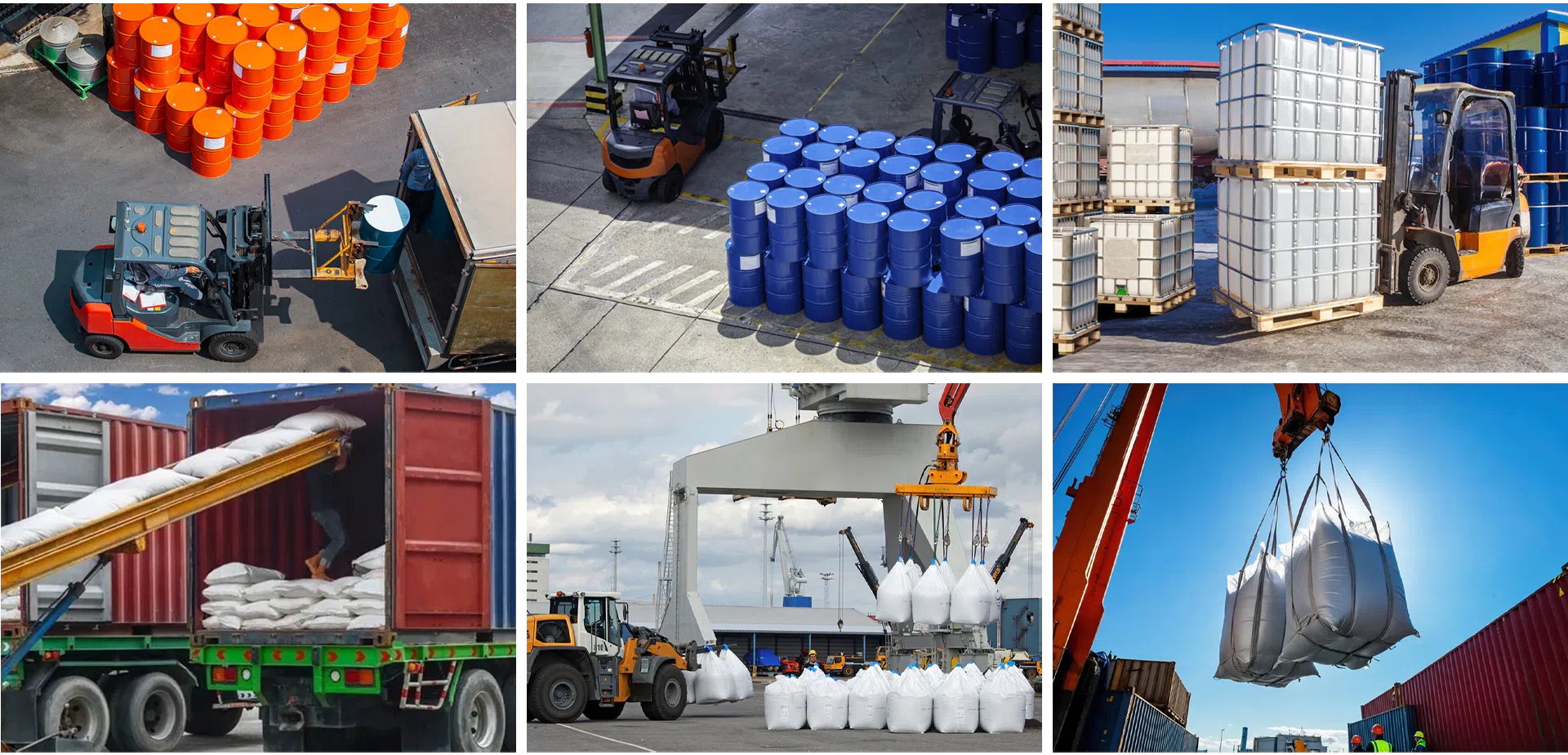
Transportation and Delivery