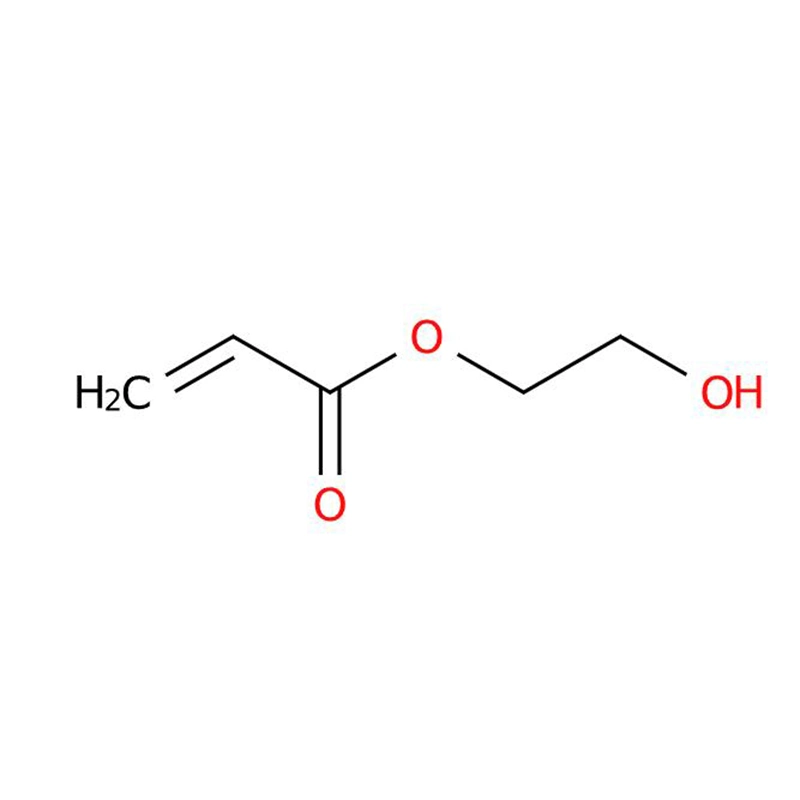
Product Description of 2-Hydroxyethyl acrylate CAS # 818-61-1
This product is a colorless liquid characterized by a low melting point of -70°C. Its boiling point varies according to ambient pressure, ranging from 90–92°C at 1.6 kPa and 74–75°C at 667 Pa. It has a relative density of 1.1098 at 20/4°C and a refractive index of 1.4, reflecting its distinct optical characteristics. The open-cup flash point is 104°C, indicating relatively low flammability under normal handling conditions. With a viscosity of 5.34 mPa·s at 25°C, the product demonstrates good fluidity and can flow readily, making it suitable for applications where smooth and efficient flow properties are required.
Factory Showcase
2-Hydroxyethyl acrylate CAS # 818-61-1 Chemical Properties
| Melting point | -60 °C |
| Boiling point | 90-92 °C12 mm Hg(lit.) |
| density | 1.106 g/mL at 20 °C |
| vapor density | >1 (vs air) |
| vapor pressure | <0.1 mm Hg ( 20 °C) |
| refractive index | n20/D 1.45(lit.) |
| Fp | 209 °F |
| storage temp. | 2-8°C |
| form | Oily Liquid |
| pka | 13.85±0.10(Predicted) |
| color | Yellow to brown |
| Water Solubility | soluble |
| FreezingPoint | -35 |
| Sensitive | Light Sensitive |
| BRN | 969853 |
| Exposure limits | ACGIH: TWA 5 mg/m3 NIOSH: TWA 5 mg/m3 |
| InChIKey | OMIGHNLMNHATMP-UHFFFAOYSA-N |
| LogP | -0.17 at 25℃ |
| CAS DataBase Reference | 818-61-1(CAS DataBase Reference) |
| NIST Chemistry Reference | 2-Propenoic acid, 2-hydroxyethyl ester(818-61-1) |
| EPA Substance Registry System | 2-Hydroxyethyl acrylate (818-61-1) |
Safety Information
| Hazard Codes | T,N |
| Risk Statements | 24-34-43-50-20/22-22 |
| Safety Statements | 26-36/39-45-61-36/37/39 |
| RIDADR | UN 2927 6.1/PG 2 |
| WGK Germany | 3 |
| RTECS | AT1750000 |
| F | 8 |
| TSCA | Yes |
| HazardClass | 8 |
| PackingGroup | II |
| HS Code | 29161290 |
| Hazardous Substances Data | 818-61-1(Hazardous Substances Data) |
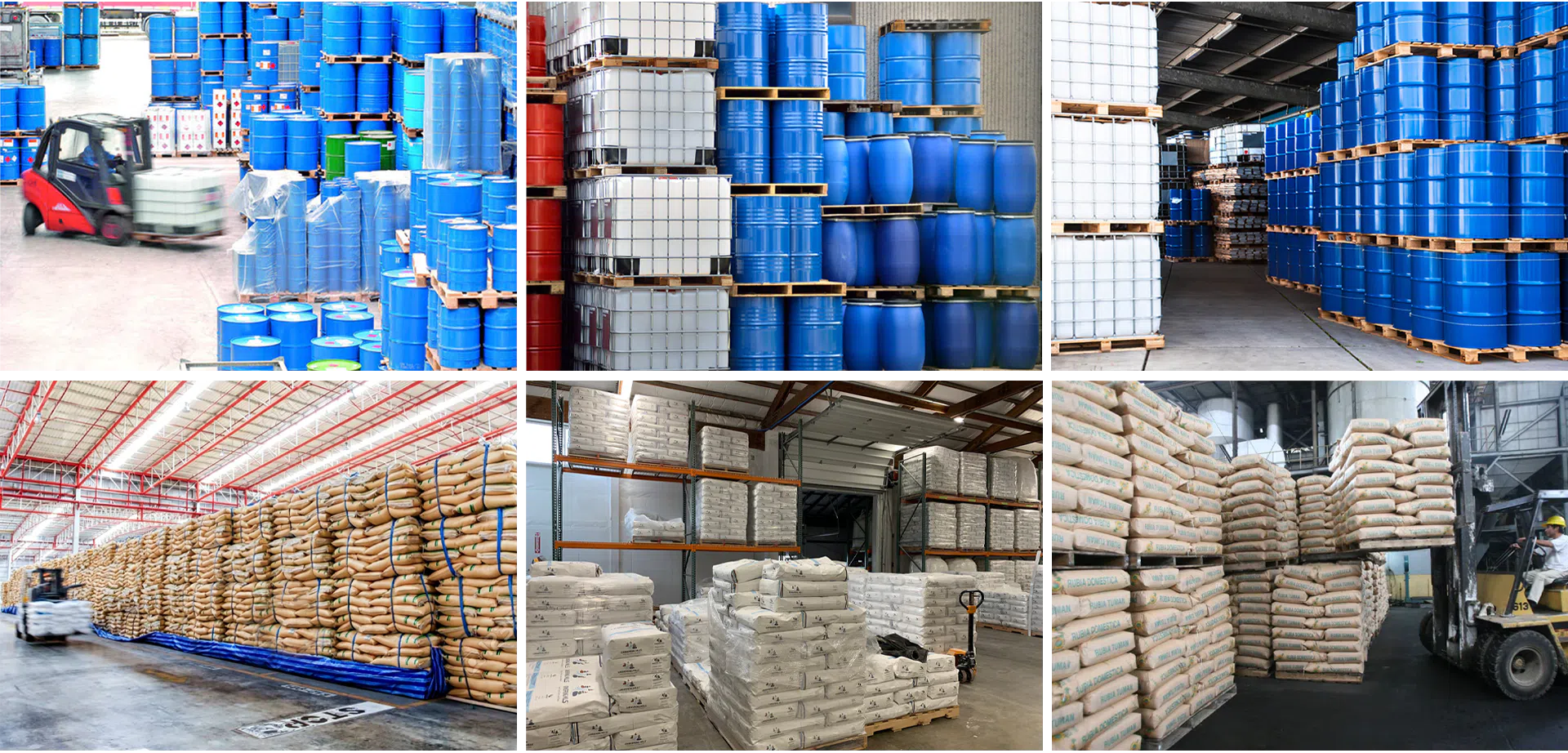
Inventory Display
Product Application of 2-Hydroxyethyl acrylate CAS # 818-61-1
2-Hydroxyethyl acrylate (HEA) is a versatile reactive monomer widely used in the production of acrylic resins, coatings, adhesives, inks, and polymer materials. It can improve the adhesion, flexibility, chemical resistance, and surface properties of polymers. It is also commonly used in UV-curable and water-based coating systems, as well as in specialty polymers and functional materials.
Transportation and Delivery