Product Description of Acrylic acid CAS#79-10-7
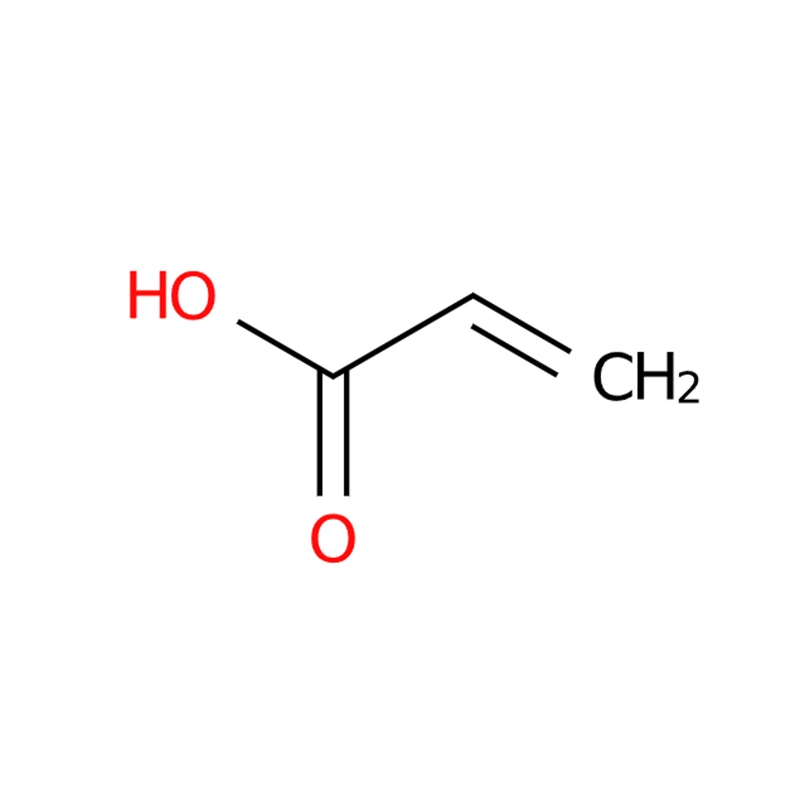
Acrylic Acid is the simplest unsaturated carboxylic acid, featuring a molecular structure composed of a vinyl group and a carboxyl group. In its pure form, it is a clear, colorless liquid with a distinctive pungent odor. It has a density of approximately 1.0511, a melting point of 14°C, and a boiling point of 140.9°C.
Acrylic Acid is highly acidic, corrosive, and chemically reactive. It is readily soluble in water, ethanol, and ether and can readily undergo polymerization to form polyacrylic acid and related polymers. It is an important raw material and chemical intermediate widely used in the production of acrylic resins, polymers, coatings, adhesives, and other specialty chemicals. Acrylic Acid can be produced through several industrial processes, including the oxidation of acrolein and the hydrolysis of acrylonitrile.
Factory Showcase
Chemical Properties of Acrylic acid CAS#79-10-7
| Melting point | 13 °C (lit.) |
| Boiling point | 139 °C (lit.) |
| density | 1.051 g/mL at 25 °C (lit.) |
| vapor density | 2.5 (vs air) |
| vapor pressure | 4 mm Hg ( 20 °C) |
| refractive index | n |
| Fp | 130 °F |
| storage temp. | Store at +15°C to +25°C. |
| solubility | 1000g/l |
| pka | 4.25(at 25℃) |
| form | Liquid |
| color | Clear |
| Odor | Acrid odor |
| PH Range | 1 - 2 |
| PH | 3.68(1 mM solution);3.14(10 mM solution);2.63(100 mM solution); |
| explosive limit | 3.9-19.8%(V) |
| Water Solubility | MISCIBLE |
| Sensitive | Air Sensitive |
| λmax | 231nm(lit.) |
| Merck | 14,130 |
| BRN | 635743 |
| Henry's Law Constant | 2.7×101 mol/(m3Pa) at 25℃, Duchowicz et al. (2020) |
| Exposure limits | PC-TWA:6 mg/m3 |
| Stability: | Stability Unstable - may contain p-methoxyphenol as an inhibitor. Prone to hazardous polymerization. Combustible. Incompatible with strong oxidizing agents, strong bases, amines. Contact with oxidizers may cause fire. Light and air sensitive. Hygroscopic. |
| Cosmetics Ingredients Functions | NAIL CONDITIONING |
| InChI | 1S/C3H4O2/c1-2-3(4)5/h2H,1H2,(H,4,5) |
| InChIKey | NIXOWILDQLNWCW-UHFFFAOYSA-N |
| SMILES | OC(=O)C=C |
| LogP | 0.46 at 25℃ |
| CAS DataBase Reference | 79-10-7(CAS DataBase Reference) |
| IARC | 3 (Vol. 19, Sup 7, 71) 1999 |
| NIST Chemistry Reference | 2-Propenoic acid(79-10-7) |
| EPA Substance Registry System | Acrylic acid (79-10-7) |
| ECETOC JACC REPORT | Acrylic acid (79-10-7) |
Safety Information
| Hazard Codes | C,N |
| Risk Statements | 10-20/21/22-35-50 |
| Safety Statements | 26-36/37/39-45-61 |
| OEB | B |
| OEL | TWA: 2 ppm (6 mg/m3) [skin] |
| RIDADR | UN 2218 |
| WGK Germany | 1 |
| RTECS | AS4375000 |
| F | 8-13 |
| Autoignition Temperature | 744 °F |
| TSCA | TSCA listed |
| HazardClass | 8 |
| PackingGroup | II |
| HS Code | 29161110 |
| Storage Class | 3 - Flammable liquids |
| Hazard Classifications | Acute Tox. 4 Dermal Acute Tox. 4 Inhalation Acute Tox. 4 Oral Aquatic Acute 1 Aquatic Chronic 2 Eye Dam. 1 Flam. Liq. 3 Skin Corr. 1A STOT SE 3 |
| Hazardous Substances Data | 79-10-7(Hazardous Substances Data) |
| Toxicity | LD50 orally in rats: 2.59 g/kg (Smyth) |
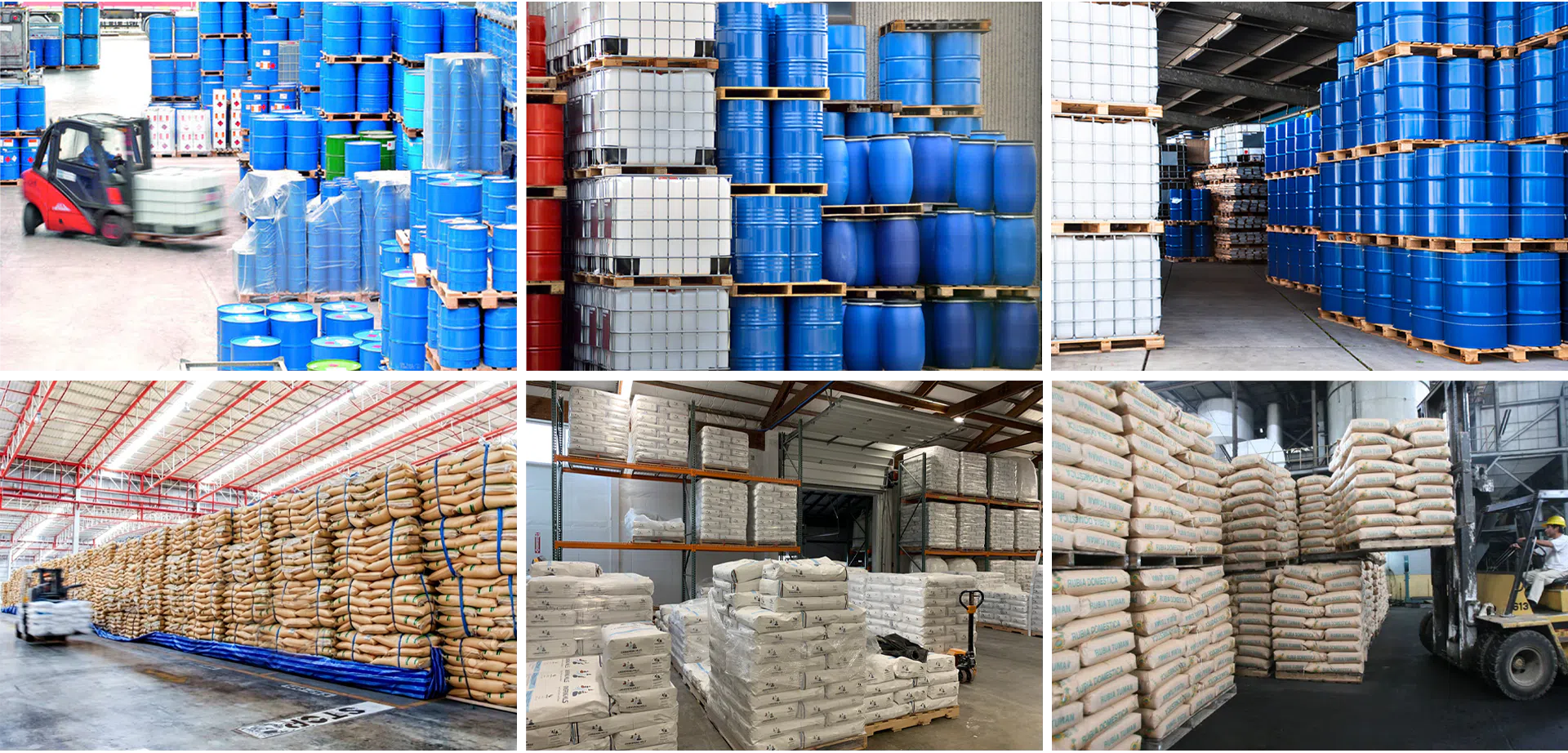
Inventory Display
Product Application of Acrylic acid CAS#79-10-7
Acrylic Acid and its derivatives are widely used in coatings, plastics, textiles, leather, paper, construction, packaging, and other industries. Acrylic acid and its esters serve as important raw materials for organic and polymer synthesis, where they are commonly copolymerized with monomers such as vinyl acetate, styrene, and methyl methacrylate to produce synthetic resins, functional polymers, and specialty additives.
Acrylic acid-based materials are also used in textile applications, including warp sizing agents, where they can provide good sizing performance and facilitate efficient desizing compared with conventional sizing materials.
Transportation and Delivery