

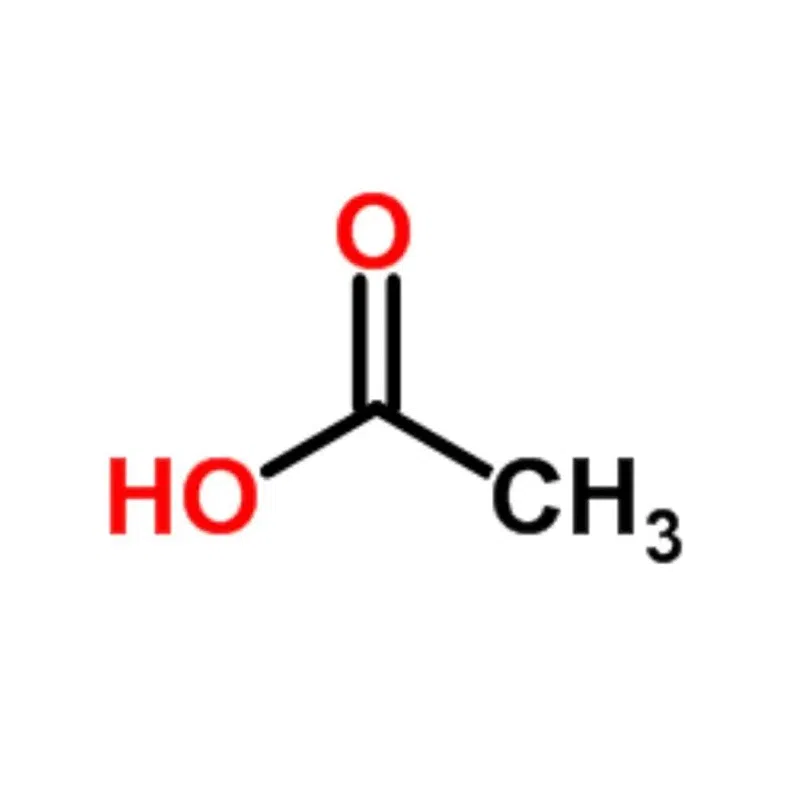
Product Description of Acetic acid CAS#64-19-7
Acetic acid (C₂H₄O₂), alternatively named ethanoic acid, vinegar acid or glacial acetic acid in its anhydrous form, is a fundamental organic aliphatic acid with mild acidity and excellent water and organic solvent miscibility. Beyond industrial chemical synthesis, it is also extensively applied in food processing, pharmaceutical manufacturing, textile dyeing, wastewater treatment and daily chemical production.
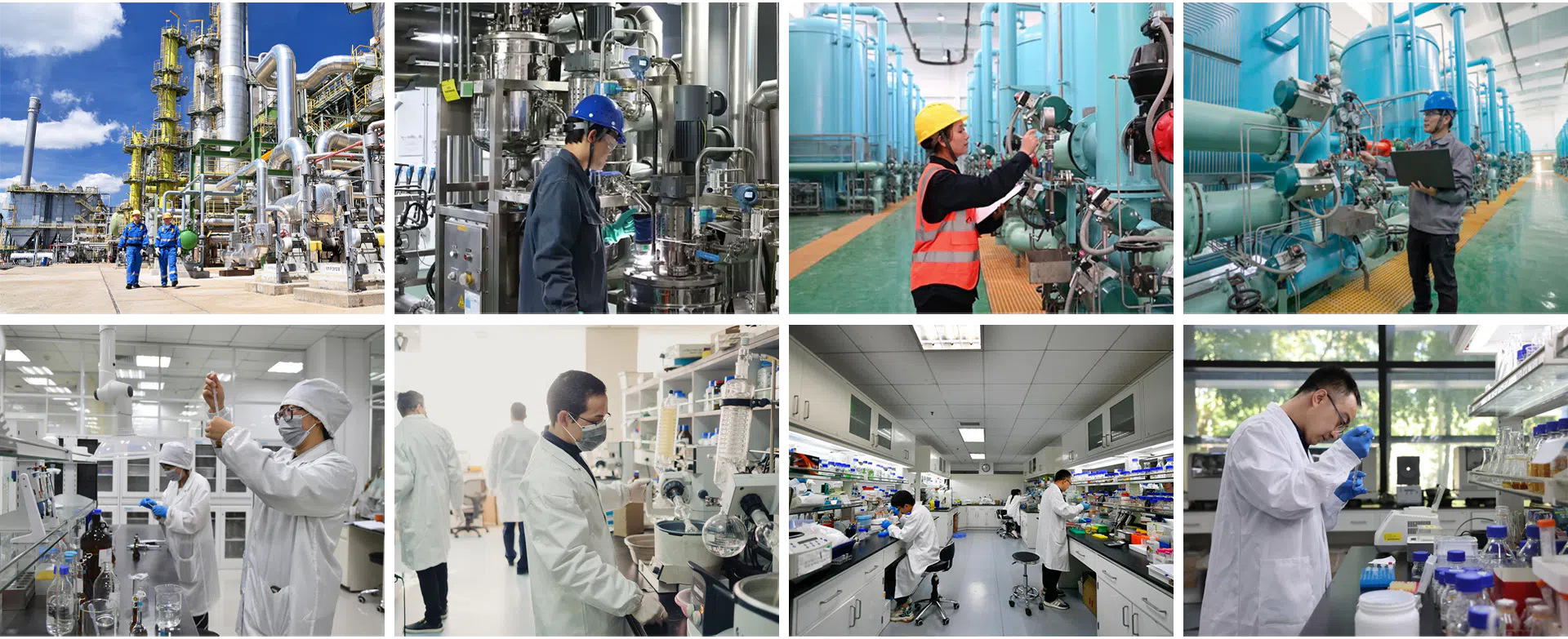
Factory Showcase
Chemical Properties of Acetic acid CAS#64-19-7
| Melting point | 16.2 °C(lit.) |
| Boiling point | 117-118 °C(lit.) |
| density | 1.049 g/mL at 25 °C(lit.) |
| vapor density | 2.07 (vs air) |
| vapor pressure | 11.4 mm Hg ( 20 °C) |
| refractive index | n20/D 1.371(lit.) |
| FEMA | 2006 | ACETIC ACID |
| Fp | 104 °F |
| storage temp. | Store below +30°C. |
| solubility | alcohol: miscible(lit.) |
| form | Solution |
| pka | 4.74(at 25℃) |
| Specific Gravity | 1.0492 (20℃) |
| color | colorless |
| Odor | Strong, pungent, vinegar-like odor detectable at 0.2 to 1.0 ppm |
| PH | 3.91(1 mM solution);3.39(10 mM solution);2.88(100 mM solution); |
| PH Range | 2.4 (1.0M solution) |
| Odor Threshold | 0.006ppm |
| Odor Type | acidic |
| explosive limit | 4-19.9%(V) |
| Water Solubility | miscible |
| λmax | λ: 260 nm Amax: 0.05 λ: 270 nm Amax: 0.02 λ: 300 nm Amax: 0.01 λ: 500 nm Amax: 0.01 |
| Merck | 14,55 |
| JECFA Number | 81 |
| BRN | 506007 |
| Henry's Law Constant | 133, 122, 6.88, and 1.27 at pH values of 2.13, 3.52, 5.68, and 7.14, respectively (25 °C, Hakuta et al., 1977) |
| Dielectric constant | 4.1(2℃) |
| Exposure limits | TLV-TWA 10 ppm ~25 mg/m3) (ACGIH, OSHA, and MSHA); TLV-STEL 15 ppm (37.5 mg/m3) (ACGIH). |
| Stability: | Volatile |
| LogP | -0.170 |
| CAS DataBase Reference | 64-19-7(CAS DataBase Reference) |
| NIST Chemistry Reference | Acetic acid(64-19-7) |
| EPA Substance Registry System | Acetic acid (64-19-7) |
Safety Information of Acetic acid CAS#64-19-7
| Hazard Codes | C,Xi |
| Risk Statements | 34-42-35-10-36/38 |
| Safety Statements | 26-36/37/39-45-23-24/25 |
| RIDADR | UN 1792 8/PG 2 |
| WGK Germany | 3 |
| RTECS | NN1650000 |
| F | 1-8-10 |
| Autoignition Temperature | 426 °C |
| TSCA | Yes |
| HazardClass | 8 |
| PackingGroup | II |
| HS Code | 29152100 |
| Hazardous Substances Data | 64-19-7(Hazardous Substances Data) |
| Toxicity | LD50 in rats (g/kg): 3.53 orally (Smyth) |
| IDLA | 50 ppm |
Inventory Display
Product Application of Acetic acid CAS#64-19-7
Acetic acid is a versatile, low-corrosive organic acid that serves as an efficient pH regulator, chemical catalyst and synthetic raw material for various industrial formulations. It is typically used in industrial production at different concentrations ranging from dilute aqueous solutions to 99.8% glacial grade, with its chemical activity and application scenarios determined by solution purity and pH value.
In industrial and food applications, acetic acid can be used as a acidity regulator, preservative and reaction intermediate in food seasonings, ester synthesis, textile finishing and cosmetic formula adjustment. It may be obtained through microbial fermentation of carbohydrates or produced via industrial methanol carbonylation synthetic processes.
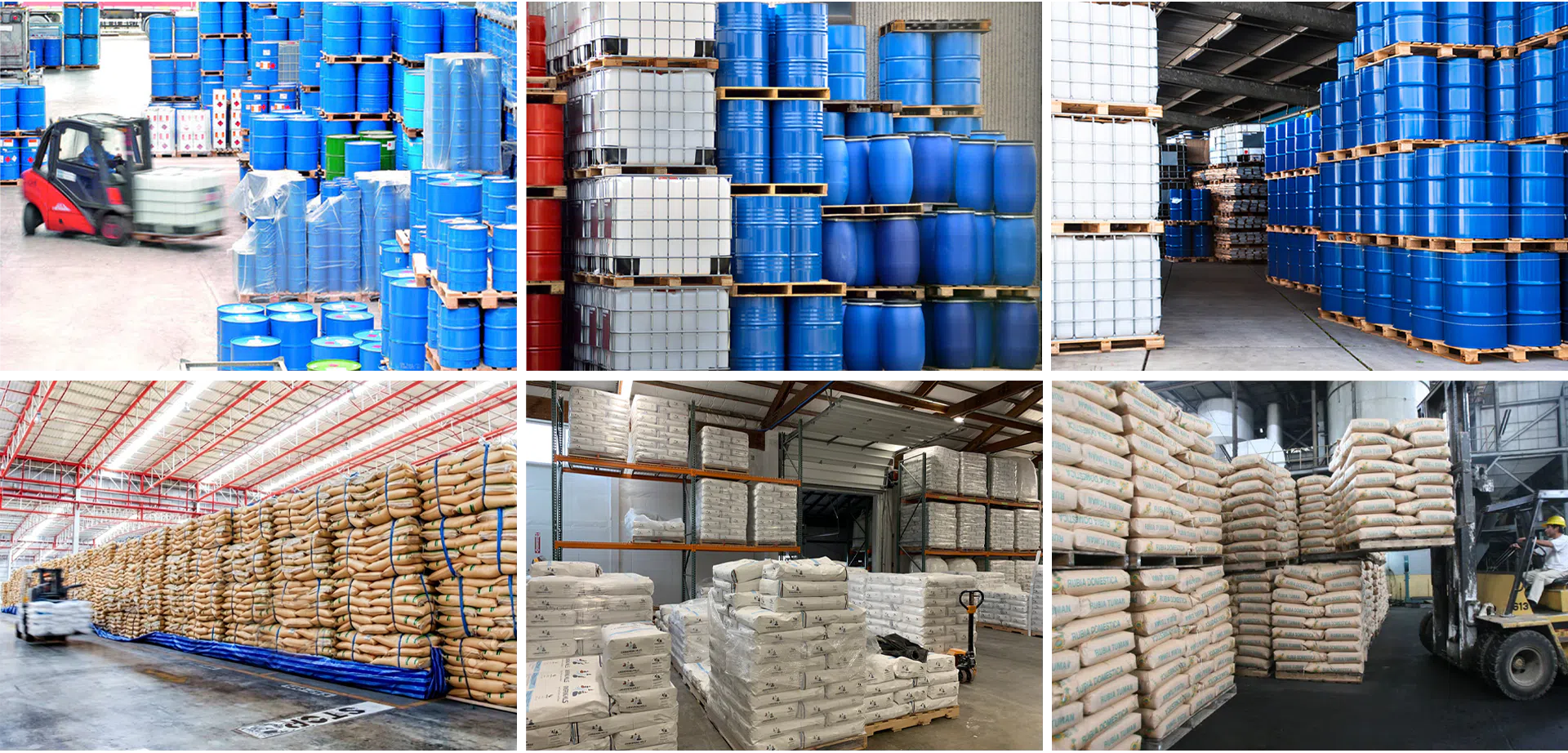
Transportation and Delivery