

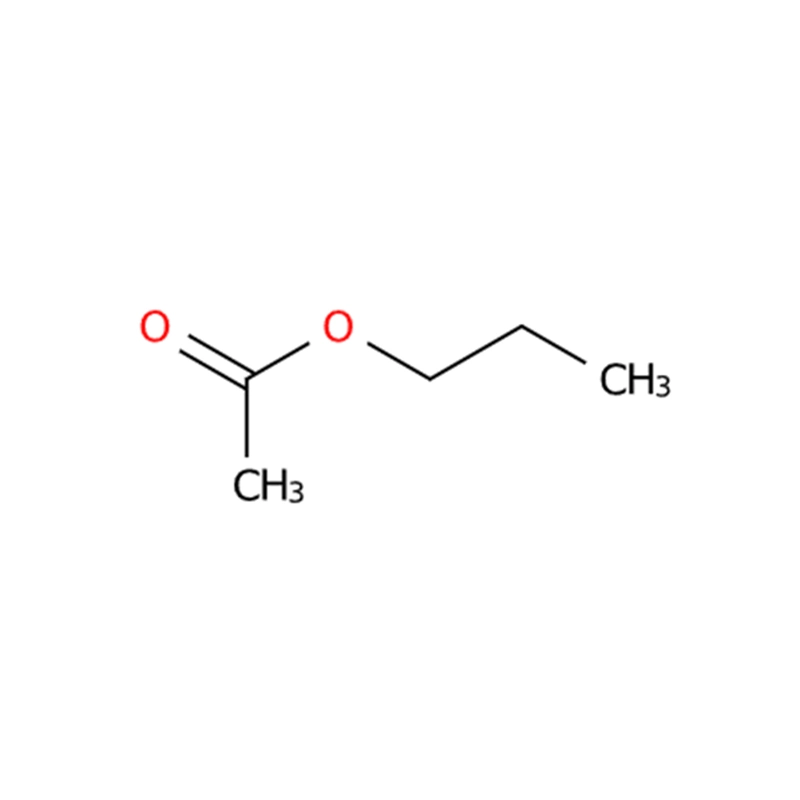
Product Description of Propyl acetate CAS#109-60-4
Propyl acetate (commonly referred to as n-propyl acetate) is a clear, colorless liquid characterized by a pleasant, mild fruity scent. This compound is naturally found in fruits such as strawberries, bananas, and tomatoes. In terms of solubility, it is only slightly soluble in water but dissolves readily in a wide range of organic solvents, including alcohols, ketones, esters, and oils.
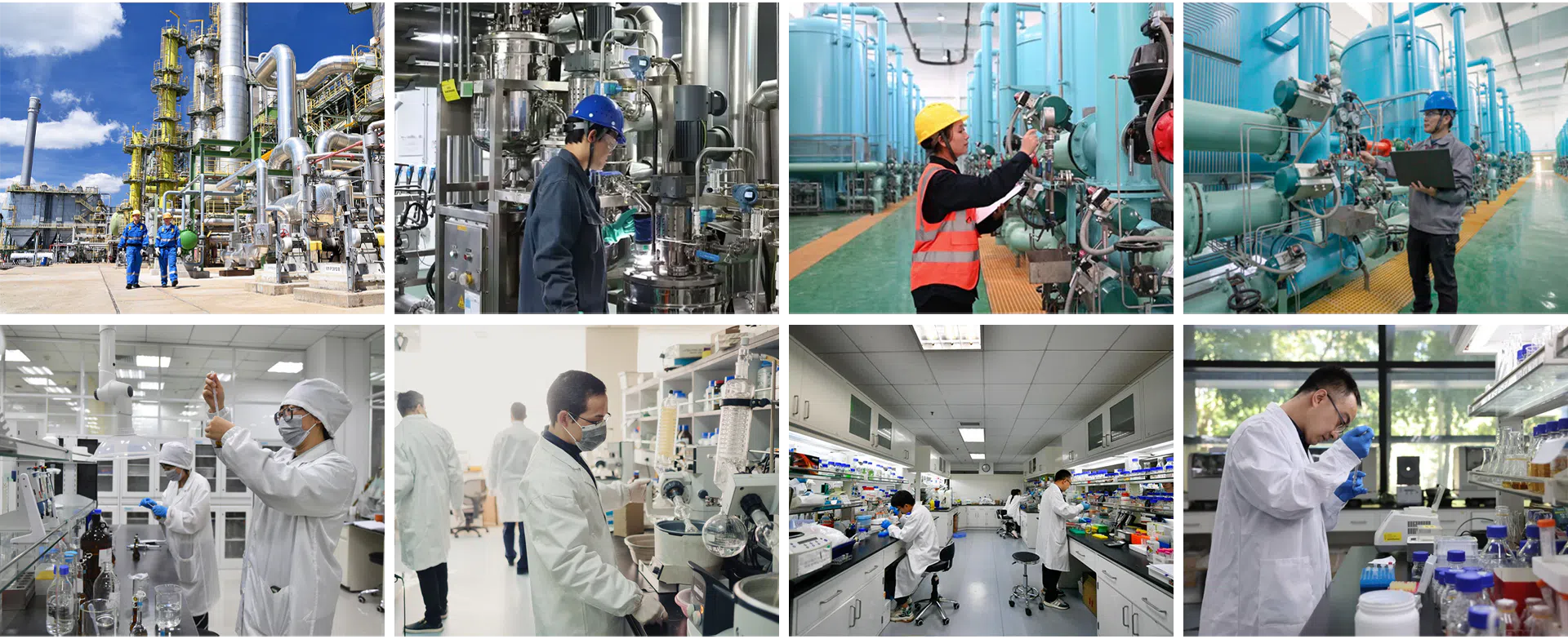
Factory Showcase
Chemical Properties of Propyl acetate CAS#109-60-4
| Melting point | -95 °C (lit.) |
| Boiling point | 102 °C (lit.) |
| density | 0.888 g/mL at 25 °C (lit.) |
| vapor density | 3.5 (vs air) |
| vapor pressure | 25 mm Hg ( 20 °C) |
| refractive index | n20/D 1.384(lit.) |
| FEMA | 2925 | PROPYL ACETATE |
| Fp | 55 °F |
| storage temp. | Store below +30°C. |
| solubility | water: soluble |
| form | Liquid |
| color | APHA: ≤15 |
| Specific Gravity | 0.889 (20/4℃) |
| Odor | Mild fruity. |
| explosive limit | 1.7%, 37°F |
| Odor Threshold | 0.24ppm |
| Odor Type | fruity |
| biological source | synthetic |
| Water Solubility | 2g/100 mL (20 ºC) |
| Thermal Conductivity | 0.135 W/(m·K) at 25 ℃ |
| Specific Heat Capacity | Cp(liquid): 1.92 J/(g·K), at 25℃ |
| JECFA Number | 126 |
| Merck | 14,7841 |
| BRN | 1740764 |
| Henry's Law Constant | 5.54 at 37 °C (static headspace-GC, van Ruth et al., 2001) |
| Exposure limits | ACGIH:TLV-TWA 100 ppm (417 mg/m3); TLV-STEL 150 ppm (626 mg/m3) OSHA:PEL-TWA 200 ppm (840 mg/m3) NIOSH:REL-TWA 200 ppm; REL-STEL 250 ppm |
| Dielectric constant | 6.3(20℃) |
| Stability: | Stable. Highly flammable. May react violently with oxidizing agents. May form explosive mixtures with air. Incompatible with strong oxidizing agents, acids, bases. |
| Cosmetics Ingredients Functions | PERFUMING SOLVENT |
| InChI | 1S/C5H10O2/c1-3-4-7-5(2)6/h3-4H2,1-2H3 |
| InChIKey | YKYONYBAUNKHLG-UHFFFAOYSA-N |
| SMILES | CCCOC(C)=O |
| LogP | 1.4 at 25℃ |
| Surface tension | 23.99mN/m at 298.15K |
| CAS DataBase Reference | 109-60-4(CAS DataBase Reference) |
| NIST Chemistry Reference | n-Propyl acetate(109-60-4) |
| EPA Substance Registry System | Propyl acetate (109-60-4) |
Safety Information
| Hazard Codes | F,Xi |
| Risk Statements | 11-36-66-67 |
| Safety Statements | 16-26-29-33 |
| OEB | A |
| OEL | TWA: 200 ppm (840 mg/m3), STEL: 250 ppm (1050 mg/m3) |
| RIDADR | UN 1276 |
| WGK Germany | 1 |
| RTECS | AJ3675000 |
| Autoignition Temperature | 842 °F |
| Hazard Note | Irritant/Highly Flammable |
| TSCA | TSCA listed |
| HS Code | 2915 39 00 |
| HazardClass | 3 |
| PackingGroup | II |
| Storage Class | 3 - Flammable liquids |
| Hazard Classifications | Eye Irrit. 2 Flam. Liq. 2 STOT SE 3 |
| Hazardous Substances Data | 109-60-4(Hazardous Substances Data) |
| Toxicity | LD50 in rats, mice (mg/kg): 9370, 8300 orally (Jenner) |
| IDLH | 1,700 ppm |
Inventory Display
Product Application of Propyl acetate CAS#109-60-4
Propyl acetate is a highly versatile solvent widely utilized in coatings, printing inks, nitrocellulose lacquers, varnishes, and various resin formulations. Beyond its industrial applications, it is also extensively used in the flavor and fragrance industry.
As a mild and fast-evaporating solvent, it is a preferred choice for flexographic and gravure printing inks, especially for printing on olefin and polyamide films. Additionally, it acts as an effective solvent for nitrocellulose, chlorinated rubber, and thermosetting phenolic resins.
Characterized by a gentle fruity scent that develops into a distinct pear-like aroma upon dilution, propyl acetate occurs naturally in bananas, tomatoes, raspberries, and other fruits. It is approved under the GB2760-86 standard as an edible flavoring agent in China, where it is primarily used to formulate pear, gooseberry, and other fruit flavors.
Furthermore, this compound demonstrates outstanding solvency for a broad spectrum of synthetic resins, including ethyl cellulose, nitrocellulose, styrene, and methacrylate resins. It serves as a key solvent in organic synthesis, coatings, and printing inks, while also functioning as an efficient industrial dehydrating agent.
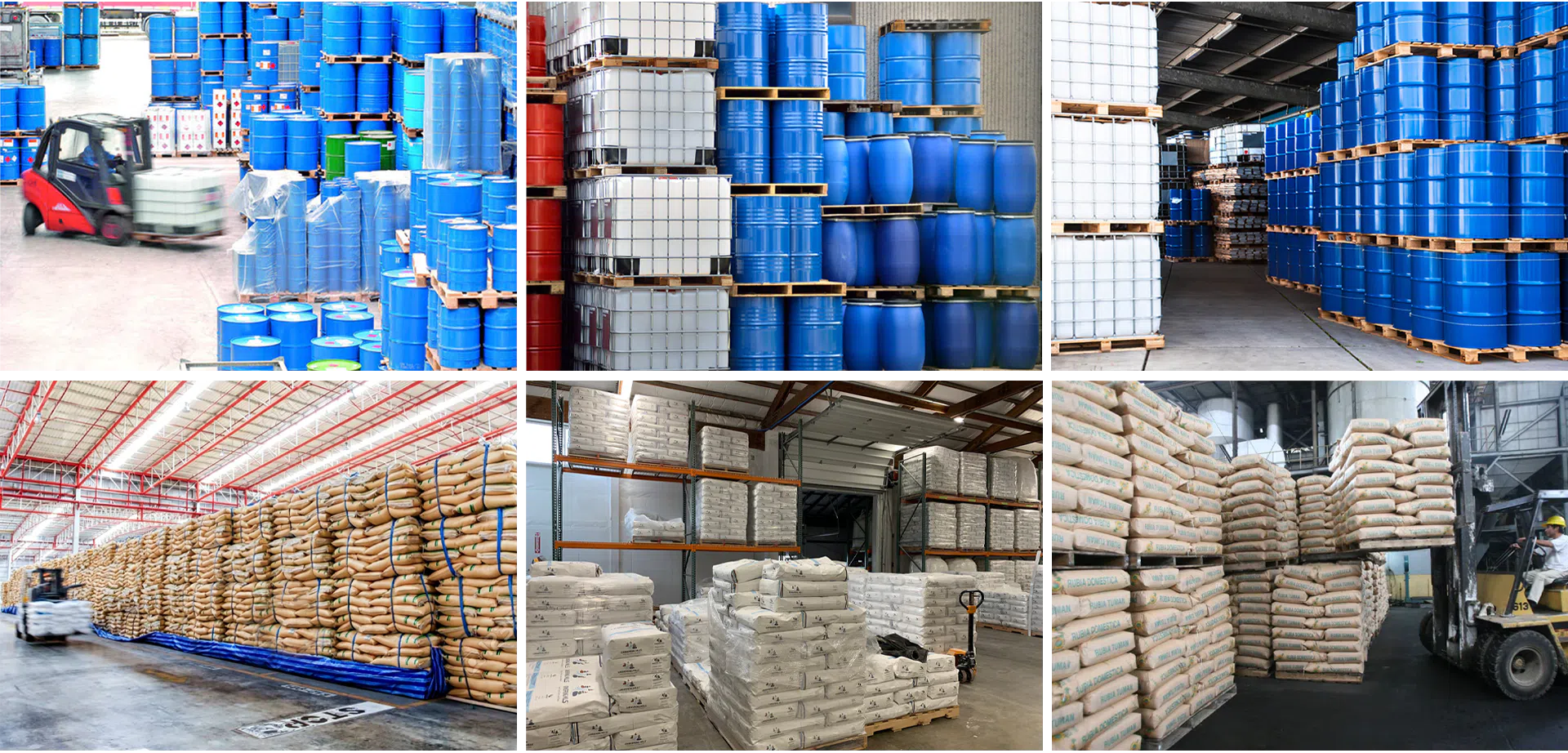
Transportation and Delivery