

Product Description
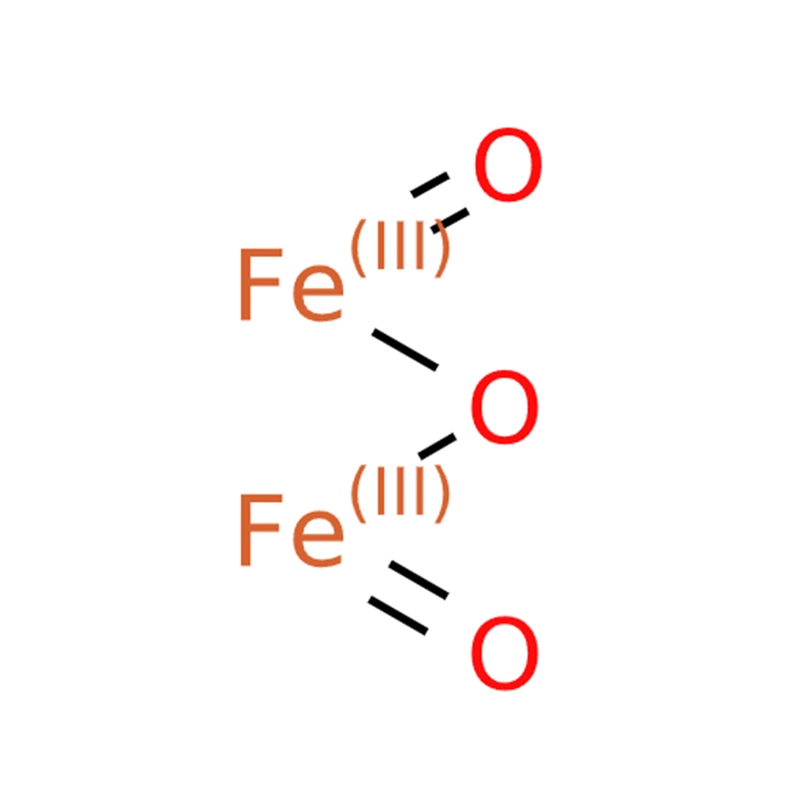
Iron oxides are produced via synthetic manufacturing processes and consist mainly of anhydrous and/or hydrated forms. They come in a range of colors, such as yellow, red, brown, and black. Compared with industrial grades, food-grade iron oxides are distinguished primarily by their much lower levels of contamination from other metals.
Factory Showcase
Chemical Properties
| Melting point | 1538°C |
| Density | 5.24 |
| Fp | >230 °F |
| Storage temp | 2-8°C |
| Solubility | It is soluble In Warm Hydrochloric Acid, Slightly Soluble in Sulfuric Acid. |
| Form | Pieces |
| Color | Black |
| Specific Gravity | 5.1~5.2 |
| PH | 3.7±0.3 |
| Water Solubility | INSOLUBLE |
| Crystal Structure | Corundum type |
| Crystal system | Three sides |
| Merck | 14,4028 |
| Space group | R3c |
| Lattice constant | a/nmb/nmc/nmα/oβ/oγ/oV/nm30.502590.502591.373590901200.3005 |
| Exposure limits | ACGIH: TWA 5 mg/m3 OSHA: TWA 10 mg/m3; TWA 15 mg/m3; TWA 5 mg/m3 NIOSH: IDLH 2500 mg/m3; TWA 5 mg/m3 |
| Stability | Stable. |
| CAS DataBase Reference | 1309-37-1(CAS DataBase Reference) |
| NIST Chemistry Reference | Iron(iii) oxide(1309-37-1) |
| IARC | 3 (Vol. 1, Sup 7) 1987 |
| EPA Substance Registry System | Ferric oxide (1309-37-1) |
Inventory Display
Safety Information
| Hazard Codes | Xi |
| Risk Statements | 36/37/38 |
| Safety Statements | 26 |
| OEB | B |
| OEL | TWA: 5 mg/m3 |
| WGK Germany | - |
| RTECS | NO7400000 |
| TSCA | Yes |
| HS Code | 28211000 |
| Hazardous Substances Data | 1309-37-1(Hazardous Substances Data) |
| IDLA | 2,500 mg Fe/m3 |
Product Application
Red iron oxide (Fe₂O₃) is an inorganic pigment that may occur naturally or be produced synthetically. It exhibits a low-chroma red tone and is valued for its excellent durability and cost-effectiveness. The synthetic form can be obtained by heating iron sulfate with quicklime in a furnace, or alternatively by calcining iron sulfate at high temperatures in the presence of air. In nature, iron oxides are derived from minerals such as hematite (Fe₂O₃) or its hydrated variants.
Transportation and Delivery



![N-[3-(Trimethoxysilyl)propyl]ethylenediamine CAS#1760-24-3](https://lihuayi.cdn.aihuazhi.cn/cdn-cgi/image/width=400,height=400,fit=cover,format=auto,quality=80/39/1_d85c17a9ca.webp)

