

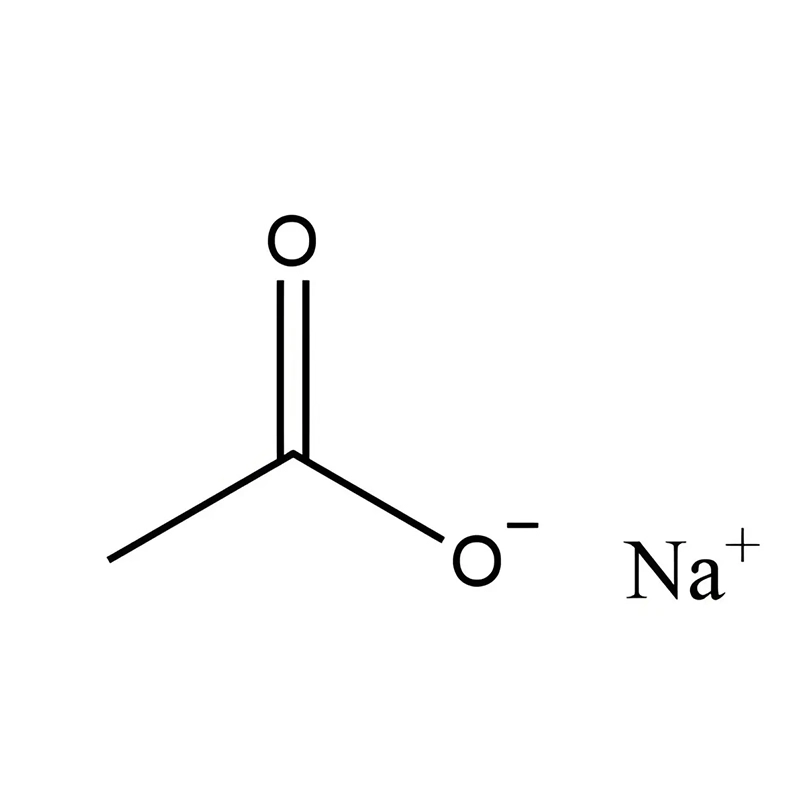
Product Description of Sodium Acetate CAS#127-09-3
Sodium acetate (CH₃COONa), the sodium salt of acetic acid, is colorless, hygroscopic crystal with extensive industrial, lab and commercial uses. In textiles, it neutralizes sulfuric acid wastewater and acts as a photoresist for aniline dyes; in construction, it works as concrete sealant against water damage; in food production, it serves as a flavor additive. It functions as a laboratory buffer, and its heat storage capacity makes it essential for heating pads, hand warmers and hot ice. Laboratories synthesize it by mixing acetic acid with sodium carbonate, bicarbonate or sodium hydroxide, while industrial production adopts glacial acetic acid and sodium hydroxide as raw materials.
Factory Showcase

Sodium acetate Chemical Properties
| Melting point | >300 °C (dec.)(lit.) |
| density | 1.01 g/mL at 20 °C |
| FEMA | 3024 | SODIUM ACETATE |
| refractive index | 1.464 |
| Fp | >250 °C |
| storage temp. | Store at +5°C to +30°C. |
| solubility | H2O: 3 M at 20 °C, clear, colorless |
| pka | 4.756[at 20 ℃] |
| form | powder |
| color | white |
| Specific Gravity | 1.45 |
| Odor | Slight acetic acid |
| PH | 7.87(1 mM solution);8.33(10 mM solution);8.75(100 mM solution);9.04(1000 mM solution) |
| PH Range | 8.5 - 9.9 at 246 g/l at 25 °C |
| Odor Type | odorless |
| biological source | synthetic |
| Water Solubility | 500 g/L (20 ºC) |
| λmax | λ: 260 nm Amax: 0.03 |
| λ: 280 nm Amax: 0.02 | |
| Sensitive | Hygroscopic |
| Hydrolytic Sensitivity | 0: forms stable aqueous solutions |
| Merck | 148571 |
| Boiling point | >400°C(decomposition) |
| BRN | 3595639 |
| Stability: | Stable. Incompatible with strong oxidizing agents, halogens. Moisture sensitive. |
| Cosmetics Ingredients Functions | BUFFERING |
| FRAGRANCE | |
| InChI | 1S/C2H4O2.Na/c1-2(3)4;/h1H3,(H,3,4);/q;+1/p-1 |
| InChIKey | VMHLLURERBWHNL-UHFFFAOYSA-M |
| SMILES | [Na+].CC([O-])=O |
| LogP | -3.72 |
| CAS DataBase Reference | 127-09-3(CAS DataBase Reference) |
| NIST Chemistry Reference | Sodium ethanoate(127-09-3) |
| EPA Substance Registry System | Sodium acetate (127-09-3) |
| Absorption | ≤0.01 at 260nm in H2O at 100mM |
| ≤0.01 at 280nm in H2O at 100mM |
Inventory Display
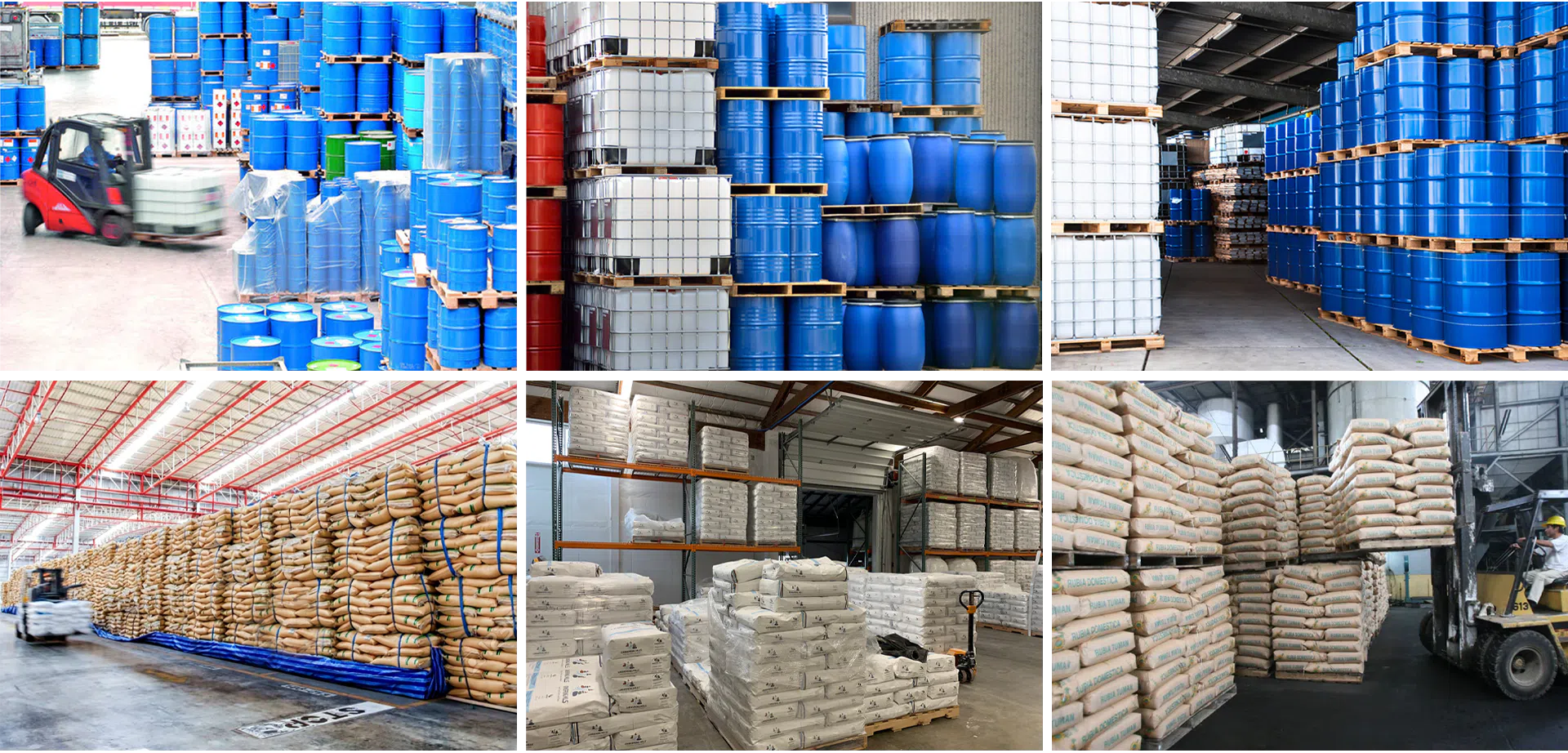
Product Application of Sodium Acetate CAS#127-09-3
Sodium acetate is widely used as a mordant in dyeing processes. It also finds applications in photography, food additives, glucose purification, meat preservation, leather tanning, and as a dehydrating agent. In analytical chemistry, it is commonly used in the preparation of buffer solutions.
In the food industry, sodium acetate is utilized as a preservative for processed meat products and is often combined with other acid-based preservatives, such as lactates and propionates, to enhance preservation performance. The typical usage level ranges from 0.2% to 0.5%. In addition, sodium acetate is frequently used in products such as salad dressings and ready-to-eat meals.
Transportation and Delivery