
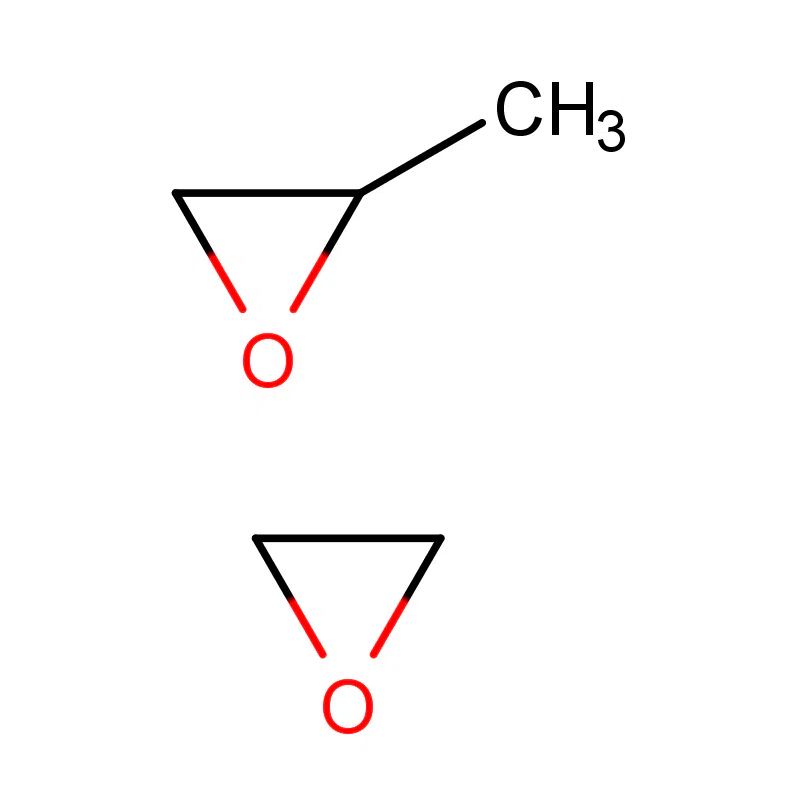
Product Description of Polyethylene-polypropylene glycol CAS#9003-11-6
Pluronic® F-127 is a nonionic surfactant commonly used to dissolve hydrophobic compounds, such as AM ester calcium indicators and fluorescent probes, and improve their cellular uptake.
It is available as a ready-to-use 10% aqueous solution, simplifying laboratory preparation. It is mainly used to assist in loading fluorescent dyes and indicators into cells, with conditions adjusted according to the cell type and compound.
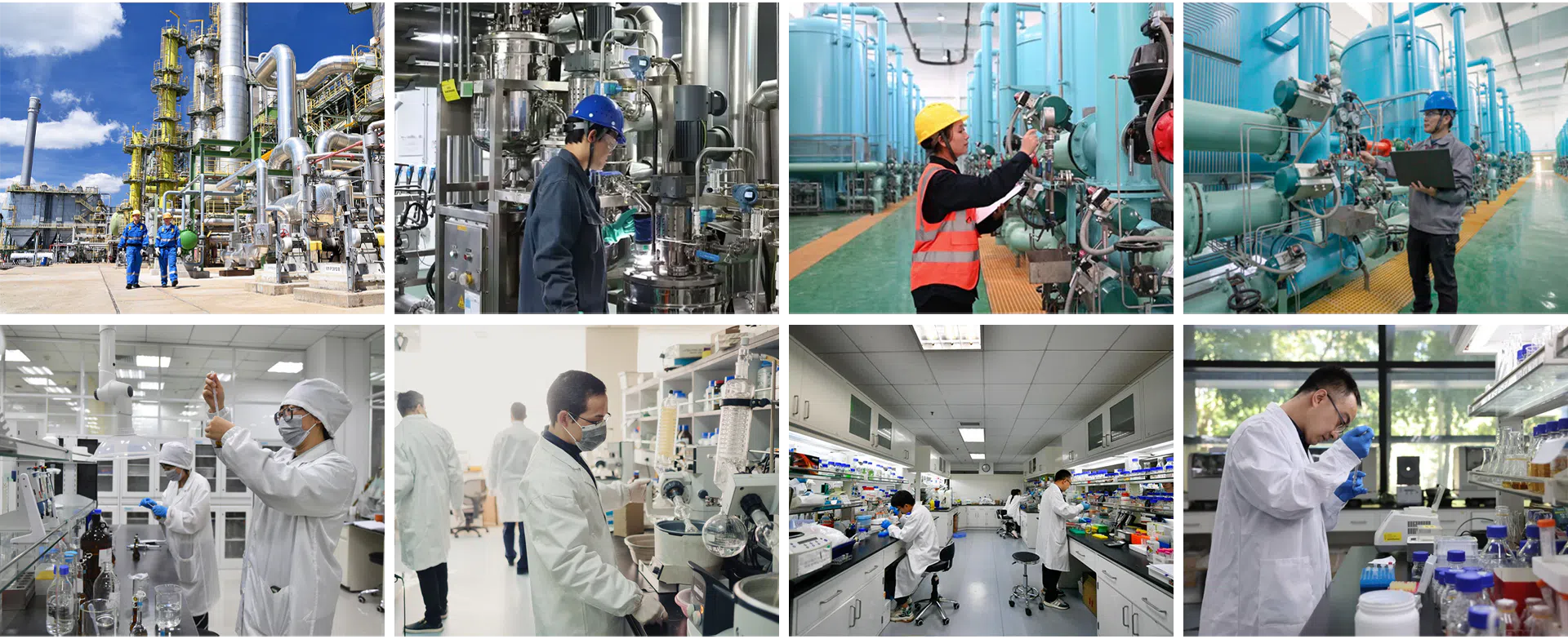
Factory Showcase
Polyethylene-polypropylene glycol CAS#9003-11-6 Chemical Properties
| Melting point | 57-61 °C |
| Boiling point | >200 °C(lit.) |
| bulk density | 1050kg/m3 |
| density | 1.095 g/mL at 25 °C |
| vapor density | >1 (vs air) |
| vapor pressure | <0.3 mm Hg ( 20 °C) |
| refractive index | n20/D 1.466 |
| Fp | >230 °F |
| storage temp. | 2-8°C |
| solubility | H2O: at <70 °Csoluble |
| form | solution |
| color | APHA: ≤120, 50/50 in CH3OH |
| PH | 5.0-7.5 (100g/L in H2O) |
| PH Range | 5.0 - 7.5 |
| biological source | synthetic |
| Water Solubility | Miscible with water. |
| λmax | λ: 260 nm Amax: ≤0.3 |
| λ: 280 nm Amax: ≤0..2 | |
| Merck | 137644 |
| Hydrophilic-Lipophilic Balance (HLB) | 18 - 23 |
Cosmetics Ingredients Functions | SURFACTANT - CLEANSING |
| SURFACTANT - HYDROTROPE | |
| CLEANSING | |
| SOLVENT | |
| HUMECTANT | |
| EMULSION STABILISING | |
| BINDING | |
| SURFACTANT - EMULSIFYING | |
| VISCOSITY CONTROLLING | |
| InChI | 1S/C3H6O.C2H4O/c1-3-2-4-3;1-2-3-1/h3H,2H2,1H3;1-2H2 |
| InChIKey | RVGRUAULSDPKGF-UHFFFAOYSA-N |
| SMILES | O2C(C2)C.O1CC1 |
| LogP | -1.293 (est) |
| EPA Substance Registry System | Poloxalene (9003-11-6) |
Inventory Display
Product Application of Polyethylene-polypropylene glycol CAS#9003-11-6
Polyethylene-polypropylene glycol is a nonionic polyoxyethylene–polyoxypropylene copolymer widely used in pharmaceuticals as an emulsifier, solubilizer, and surfactant. Its hydrophilic and hydrophobic segments provide good surface activity.
Different grades vary in the ethylene oxide/propylene oxide ratio, giving them different properties. It is commonly used in intravenous fat emulsions, syrups, elixirs, ointments, suppositories, gels, and tablets as a solubilizer, stabilizer, wetting agent, binder, or coating material.
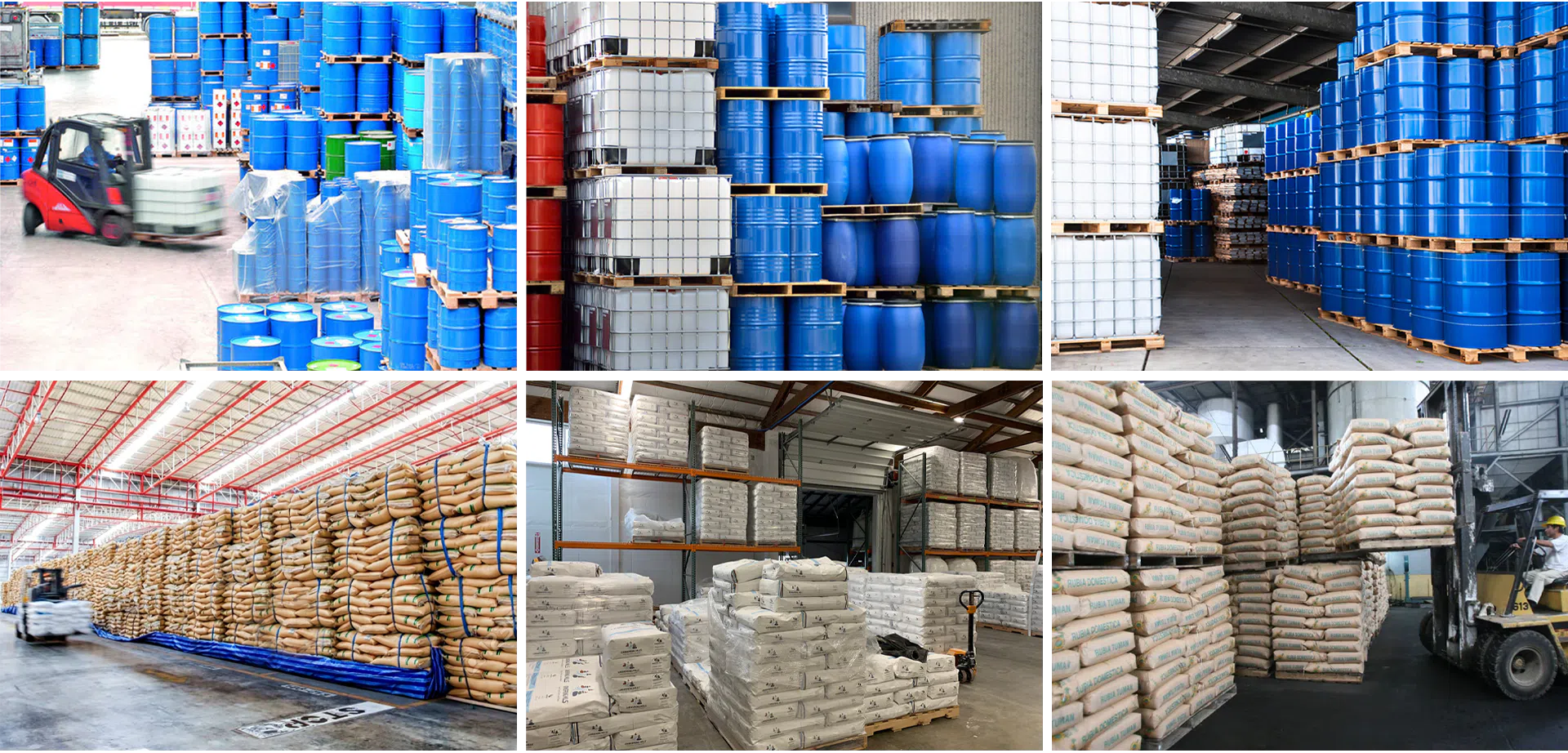
Transportation and Delivery