
I. High-Purity Electronic-Grade Titanium Dioxide
High-purity electronic-grade titanium dioxide refers to titanium dioxide material with a purity of over 99.5%—typically requiring 99.9% or higher—specifically designed for applications in electronic components, the high-end electronics industry, and fields such as optical glass and crystals. In the optical sector, it is used to manufacture high-end products such as high-refractive-index optical glass, optical fibers, laser crystals, and synthetic gemstones.
II. Key Specifications of High-Purity Electronic-Grade Titanium Dioxide
1. Ultra-high purity
This is the most critical parameter, requiring extremely low total impurity levels. Strict limits are placed on elements detrimental to electrical performance, such as alkali metals (e.g., Na, K), alkaline earth metals (e.g., Ca, Mg), and radioactive elements. Under conditions of high-temperature sintering or electric field exposure, these impurities tend to migrate, leading to a reduction in the dielectric material's breakdown voltage or an increase in dielectric loss.
2. Specific Crystal Forms
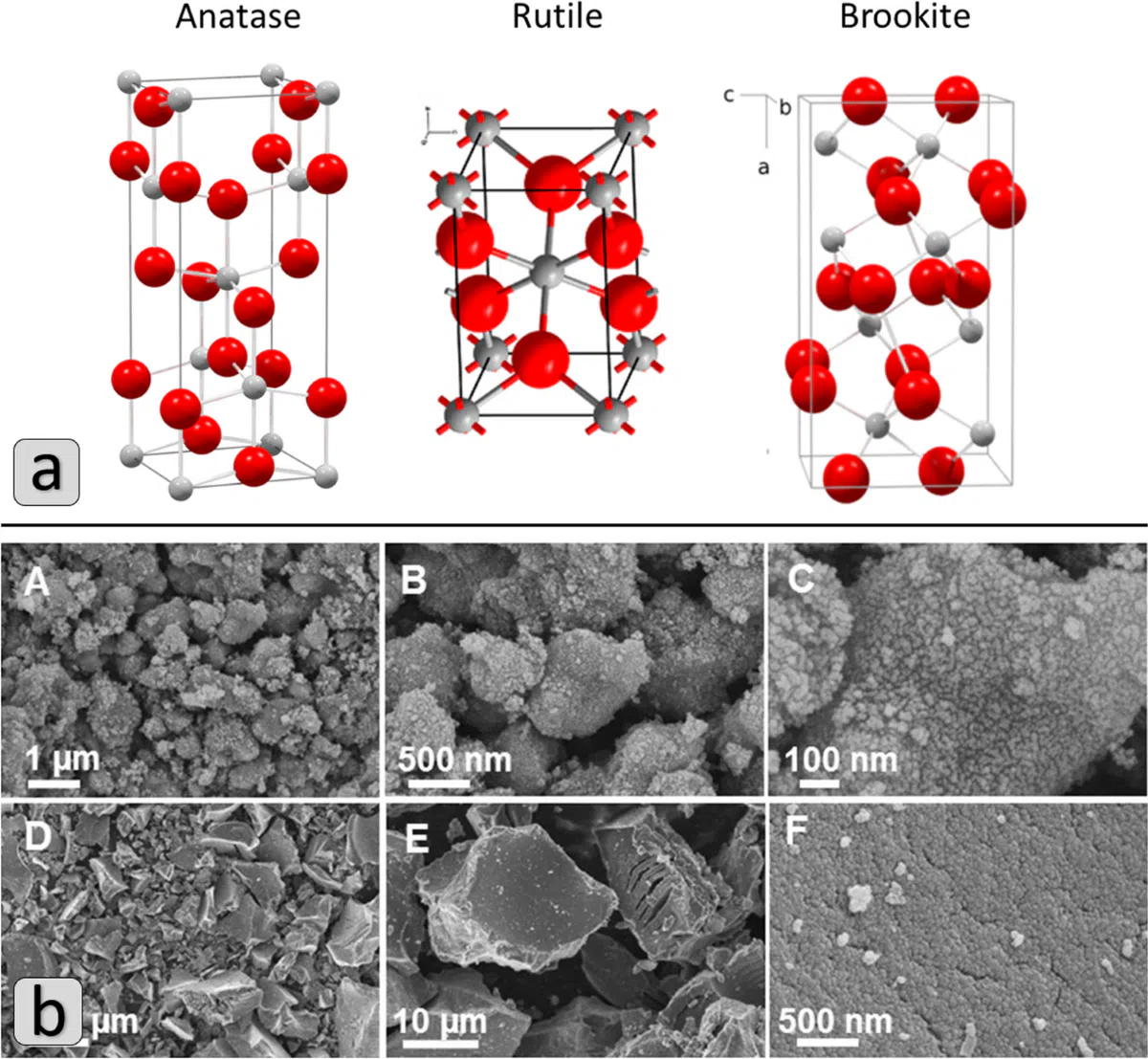
The titanium dioxide used in the electronics industry primarily comes in anatase, rutile, and anatase-rutile composite forms. Different applications favor specific crystal forms; for instance, the PTC industry tends to prefer rutile-dominant titanium dioxide, whereas the MLCC industry leans towards the anatase form.
3. Physical Properties
Electronic-grade products are subject to strict requirements regarding particle size distribution, specific surface area, crystal phase transformation rate, and particle dispersion. Particle size is typically controlled within the sub-micron to nano-scale range (e.g., 0.2–1.0 μm or less than 100 nm) to ensure the stability of subsequent processes such as tape casting and sintering shrinkage.
III. Main Application Areas of High-Purity Electronic-Grade Titanium Dioxide
High-purity electronic-grade titanium dioxide can be synthesized at high temperatures with raw materials such as barium carbonate and strontium carbonate to produce ceramic materials—including barium titanate (BaTiO₃), strontium titanate, calcium titanate, barium strontium titanate, calcium copper titanate, and lead zirconate titanate (PZT)—which are widely used in the electronic ceramics industry for applications such as thermistors (PTC), multilayer ceramic capacitors (MLCC), and piezoelectric ceramics (PZT). For instance, barium titanate-based materials, which combine thermistor properties with a high dielectric constant, serve as the core foundational materials for PTC thermistors and MLCC capacitors.
Furthermore, this material is utilized in the fields of optical glass and crystals to manufacture high-end products such as high-refractive-index optical glass, optical fibers, laser crystals, and synthetic gemstones.
IV. Overview of the Electronic Ceramics Industry Utilizing High-Purity Electronic-Grade Titanium Dioxide
PTC Thermistors: The core material is barium titanate (BaTiO₃)-based ceramic (pure BaTiO₃ is an insulator, whereas BaTiO₃ doped with lanthanum or niobium becomes a highly conductive n-type semiconductor). At room temperature, its resistance is very low, allowing current to flow freely; however, once the temperature exceeds approximately 120°C, the resistance surges by tens of thousands of times within a span of just a few degrees, effectively cutting off the current. As the temperature drops, the resistance automatically returns to its initial state, functioning much like a self-resetting, thermally controlled switch. PTC thermistors are commonly used for overcurrent protection and constant-temperature heating applications.
Multilayer Ceramic Capacitors (MLCCs): The core material is barium titanate (BaTiO₃)-based ceramic with a high dielectric constant. This material enables high capacitance; by stacking hundreds or even thousands of ultra-thin ceramic layers, MLCCs achieve high capacitance within a tiny footprint. They are widely used in devices such as mobile phones, computers, and automotive electronics.
Piezoelectric Ceramics (PZT): The core material is polarized lead zirconate titanate (PZT) ceramic. It exhibits piezoelectric properties, generating an electric charge on its surface when subjected to mechanical pressure and undergoing physical deformation when an electric voltage is applied. PZT ceramics are commonly used in applications such as lighters, pressure sensors, precision positioning stages, ultrasonic motors, and buzzers.
V. Differences in the Application of High-Purity Electronic-Grade Titanium Dioxide in PTC and MLCC Sectors
In the PTC sector, high titanium dioxide purity is required to ensure semiconducting properties, while requirements regarding crystal form and particle size are relatively flexible; the material is predominantly of the rutile phase or a specific mixed-crystal form. In the MLCC sector, extremely high purity and ultra-fine, uniform particle sizes are required; the crystal form is typically predominantly anatase or a specific mixed-crystal form to meet the demands for thinner layers and miniaturization.
PTC applications prioritize semiconducting characteristics resulting from doping; while raw material purity is critical, there is greater tolerance regarding particle size and crystal form. In contrast, MLCCs require extremely thin dielectric layers to achieve high capacitance within a tiny volume, imposing stringent—often extreme—demands on the purity, particle size, crystal form, and process stability of the titanium dioxide raw material.
VI. Micro-nano: Focusing on high-purity electronic-grade titanium dioxide, empowering electronic ceramics production
Fully recognizing the diverse requirements for high-purity electronic-grade titanium dioxide across various sectors of the electronic ceramics industry, Jiweina has developed a range of specialized products. By precisely controlling key physical properties—such as purity, crystalline phase, and particle size—the company effectively meets the varied needs of applications ranging from electronic ceramics (including PTC thermistors, MLCCs, PZT piezoelectric ceramics, and microwave dielectric ceramics) to high-end uses like optical glass and crystals. SEM images illustrating the morphology and structure of some of these products are shown below.